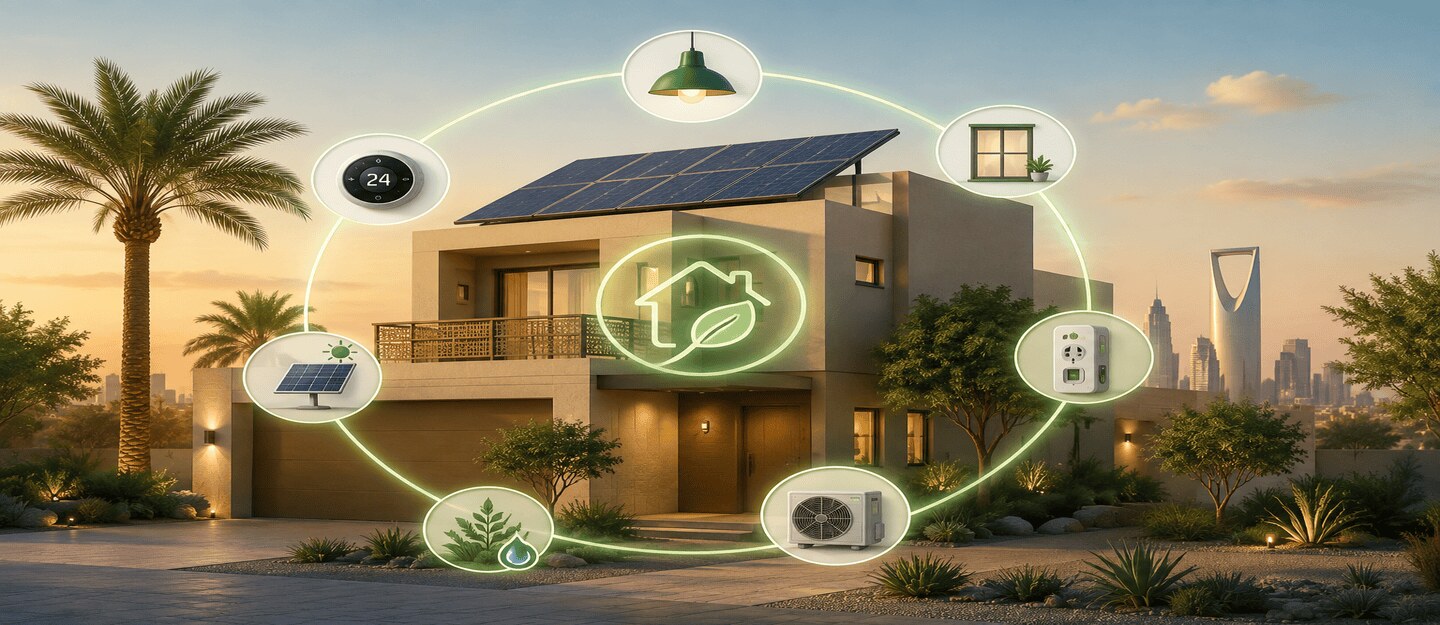
Looking for practical Energy-Saving Ideas for Homes in Saudi Arabia? Simple changes to your cooling habits, appliances, lighting, and home insulation can help reduce energy consumption and improve comfort without major renovations. Keep reading to learn how to make your Saudi home more energy-efficient and reduce unnecessary electricity use.
Why Energy Efficiency Matters in Saudi Homes?
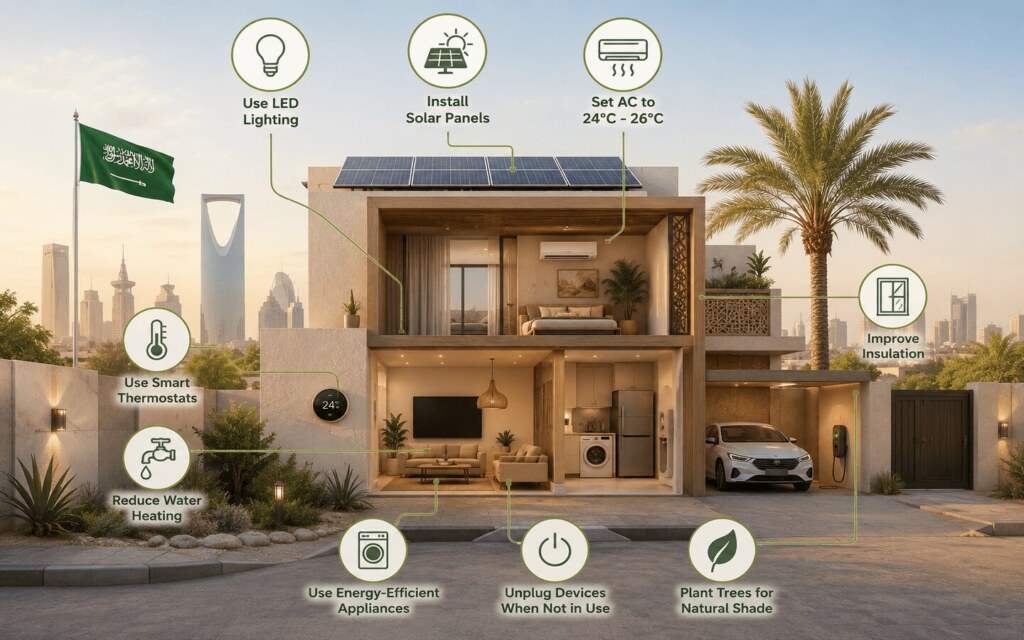
The hot Saudi climate means cooling systems can operate for long periods, particularly during the summer. As a result, air conditioning should be one of the first areas to consider when looking for ways to reduce household energy consumption. However, cooling is not the only factor. Lighting, water heating, kitchen appliances, electronics, insulation, windows, and everyday habits can all influence how much energy a home uses.
A more energy-efficient home can offer several benefits:
- Lower electricity consumption and household costs
- Better indoor thermal comfort
- Reduced energy waste
- More efficient operation of appliances and cooling systems
- Longer equipment life when systems are properly maintained
- A more sustainable approach to household energy use
The Most Effective Energy-Saving Methods for Saudi Arabia’s Climate
When adapting Energy-Saving Ideas for Homes to Saudi conditions, cooling efficiency should take priority. Saudi building guidelines emphasize thermal resistance, reducing air leakage, and selecting efficient mechanical, water-heating, electrical, and lighting systems.
Improve Home Insulation
Good insulation helps limit heat transfer between the outdoor environment and the interior of your home. This is particularly valuable in Saudi Arabia, where external temperatures can become extremely high.
Check the insulation around:
- Exterior walls
- Roofs
- Windows
- Doors
- Ductwork
Seal Windows and Doors
Small gaps around windows and doors can allow conditioned air to escape and hot outdoor air to enter. Inspect window frames and doors for noticeable air leakage. Weatherstripping, suitable sealants, and door sweeps can help improve the airtightness of the home.
Maintain Your Air Conditioner
Regular AC maintenance is one of the most practical ways to improve cooling efficiency. Clean or replace filters according to the manufacturer’s recommendations and keep outdoor units free from dust and obstructions. Professional servicing can also help identify problems that may cause the system to work harder than necessary. A well-maintained AC system can provide more consistent cooling while avoiding unnecessary energy consumption.
Use Your Thermostat Wisely
Avoid setting the thermostat unnecessarily low. A reasonable indoor temperature can help balance comfort and energy use. A programmable or smart thermostat can also automate temperature adjustments based on household routines. Smart technologies are recognized by The Saudi Energy Efficiency Center (SEEC) as a potential way to improve building operation and reduce energy waste.

Reduce Direct Sunlight
Windows exposed to strong sunlight can increase indoor heat gain. Consider practical shading solutions such as:
- Exterior shades
- Curtains and blinds
- Solar-control window treatments
- Shaded outdoor areas
- Suitable landscaping
Simple Energy-Saving Habits That Make a Difference
Not every improvement requires professional installation. Everyday habits can also contribute to lower energy consumption.
Switch to LED Lighting
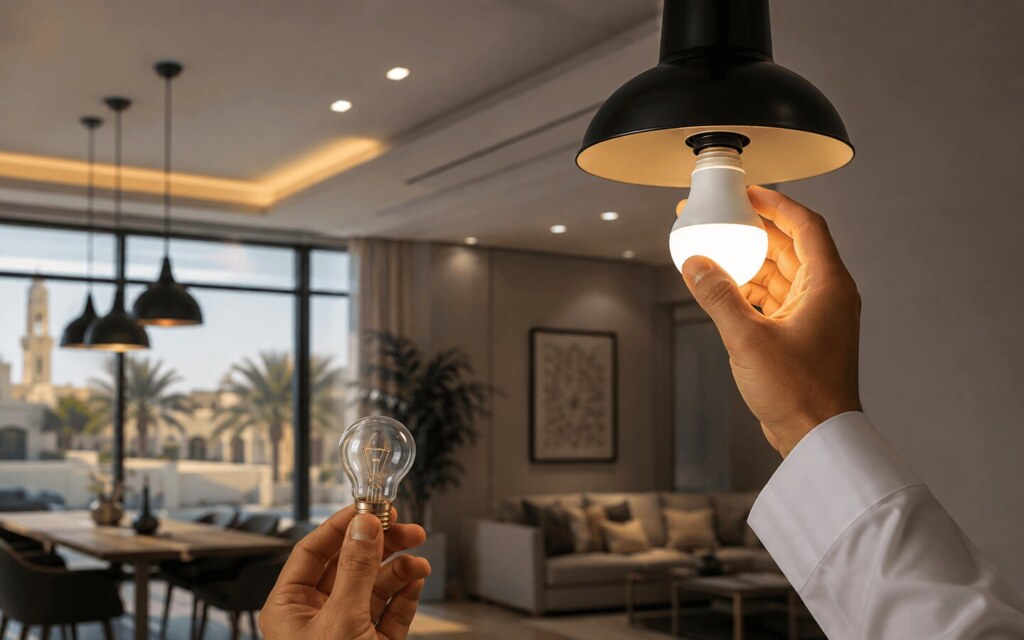
Replace traditional bulbs with energy-efficient LED lighting. LEDs generally use significantly less electricity and have a longer service life. Saudi sustainability guidelines specifically recommend LED lighting as an energy-efficient option for homes and other buildings. Also remember to switch lights off when rooms are unoccupied and make use of natural daylight where practical.
Turn Off Standby Electronics
Many electronic devices continue consuming electricity while connected to power, even when they are not actively being used. Connect entertainment devices and other suitable electronics to a power strip and switch it off when they are not needed. This can make it easier to reduce unnecessary standby consumption.
Unplug Chargers When Not in Use
Chargers can continue drawing a small amount of electricity when plugged in without actively charging a device. Unplugging chargers after use is a simple habit that can help avoid unnecessary consumption.
Use Appliances Efficiently
Washing machines, dishwashers, dryers, refrigerators, and other large appliances can contribute significantly to household energy use.
To improve efficiency:
- Run washing machines and dishwashers with suitable full loads.
- Use energy-saving settings where available.
- Avoid opening the refrigerator unnecessarily.
- Keep refrigerator ventilation areas clean.
- Clean dryer vents where applicable.
- Follow the manufacturer’s maintenance recommendations.
Consider Air-Drying Clothes
Where practical, air-drying clothes can reduce the electricity associated with mechanical drying. In Saudi homes, outdoor drying may be convenient during suitable weather conditions, while indoor drying can be considered when outdoor conditions are unsuitable.
Energy-Saving Ideas for Different Areas of the Home
Here is a quick table summarising practical Energy-Saving Ideas for Homes for different areas:

Area | Energy-Saving Idea | Potential Benefit |
|---|---|---|
Area Air conditioning | Energy-Saving Idea Maintain filters and set reasonable temperatures | Potential Benefit Reduces unnecessary cooling demand |
Area Windows | Energy-Saving Idea Seal gaps and use shading | Potential Benefit Limits heat gain and air leakage |
Area Lighting | Energy-Saving Idea Install LED bulbs | Potential Benefit Uses less electricity |
Area Water heating | Energy-Saving Idea Improve insulation and use efficient systems | Potential Benefit Reduces heat loss |
Area Kitchen | Energy-Saving Idea Maintain refrigerators and use appliances efficiently | Potential Benefit Reduces appliance energy use |
Area Electronics | Energy-Saving Idea Switch off unused devices | Potential Benefit Limits standby consumption |
Area Laundry | Energy-Saving Idea Use efficient cycles and air-dry when practical | Potential Benefit Reduces appliance runtime |
Area Smart technology | Energy-Saving Idea Automate temperature and lighting controls | Potential Benefit Helps manage consumption |
Make Your Water Heating More Efficient
Water heating is another area worth considering, particularly in homes with frequent hot-water use. If you have an electric storage water heater, appropriate insulation can help reduce heat loss. When replacing an old system, compare available energy-efficient water-heating options and select a system that suits your household’s needs.
Use Ceiling Fans Strategically
Ceiling fans can complement air conditioning by improving air circulation and perceived comfort. Rather than cooling an entire home when only one room is occupied, consider using the AC where cooling is needed and a fan to improve air movement in the occupied space. Fans should not be treated as a replacement for AC in extreme heat, but they can be useful as part of a broader cooling strategy.
Make Smart Technology Work for You
Smart home technology can make energy management easier. Consider using:
Smart Thermostats
Smart thermostats can automatically adjust cooling according to household schedules and preferences, helping prevent unnecessary operation when rooms are unoccupied.
Motion and Lighting Sensors
Motion sensors can automatically switch lights on and off based on occupancy, particularly in areas such as corridors, bathrooms, storage rooms, and entrances.
Smart Plugs
Smart plugs can help manage selected electronics and make it easier to switch devices off instead of leaving them on standby. SEEC’s energy-efficiency guidance also highlights smart energy-saving devices and continuous monitoring as tools that can support more efficient building operation.
Also Read: Investing in Energy Infrastructure in Saudi Arabia
Reduce Heat Gain Around the Home
Your home’s surroundings can influence indoor temperatures. Where appropriate, shading trees, covered outdoor spaces, awnings, and other landscaping solutions can help reduce direct solar exposure. When planning new construction, orientation, shading, insulation, and the building envelope should be considered together. Saudi building guidance emphasizes the importance of building envelopes with adequate thermal resistance and low air leakage as part of energy-efficient residential design.
Consider an Energy Audit
If you have already implemented basic improvements but still want to reduce consumption, consider a professional energy assessment. An assessment can help identify areas where your home may be losing energy, such as inadequate insulation, inefficient equipment, air leakage, or unnecessary consumption.
SEEC’s energy-efficiency programs emphasize identifying energy-saving opportunities and using systematic approaches to improve energy performance.
A Practical Energy-Saving Routine for Saudi Households
Tip: You do not have to make every change at once. Start with the improvements that are easiest to implement and gradually work toward larger upgrades.
| Priority | Action | Difficulty |
|---|---|---|
| 1 | Maintain AC filters and equipment | Easy |
| 2 | Switch to LED lighting | Easy |
| 3 | Turn off unused lights and electronics | Easy |
| 4 | Seal doors and windows | Easy to moderate |
| 5 | Use smart temperature controls | Moderate |
| 6 | Improve insulation and shading | Moderate to high |
| 7 | Upgrade inefficient appliances | Moderate |
| 8 | Arrange a professional energy assessment | Professional |
Frequently Asked Questions
Here are some of the most frequently asked questions about saving energy at home:
Maintain your AC, improve insulation, seal windows and doors, use LED bulbs, adjust thermostat settings, reduce standby power, unplug unused chargers, use appliances efficiently, improve water-heating efficiency, and consider smart home controls.
In Saudi Arabia, improving cooling efficiency is one of the most important priorities. Proper AC maintenance, suitable thermostat settings, good insulation, and reducing heat gain can help limit unnecessary cooling demand.
Simple options include switching to LED lighting, turning off unused electronics, using appliances efficiently, sealing air leaks, improving shading, maintaining AC systems, and using smart controls.
Start by identifying where most electricity is being consumed. For many Saudi homes, cooling is a key area. Combine efficient AC use with insulation, shading, efficient lighting, appliance maintenance, and better everyday habits.
Here we have reached the end of our article, where we discussed Energy-Saving Ideas for Homes, including efficient cooling, insulation, lighting, appliances, and smart energy habits. Follow Bayut blog for the latest real estate tips and insights.



 as a preferred source on Google