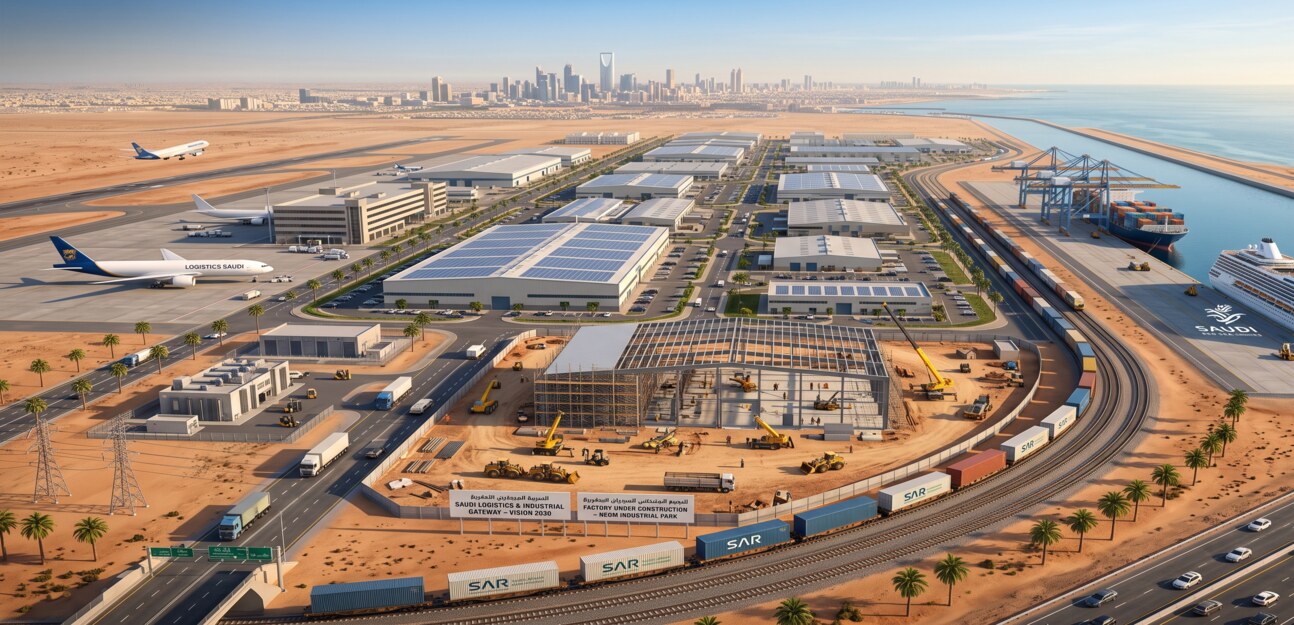
The industrial and logistics real estate in Saudi Arabia is currently experiencing an unprecedented boom. Driven by a comprehensive national economic transformation and a rapid shift in global supply chain dynamics, this asset class has emerged as one of the most resilient and attractive options for both regional and international investors.
About the Transformation of Industrial and Logistics Real Estate Sector
Moving away from traditional and rudimentary storage spaces, the market is now demanding highly sophisticated warehouses, rapid distribution centers, light manufacturing facilities and temperature-controlled cold storage.
This transformation is not occurring in a vacuum. It is deeply anchored in strong macroeconomic fundamentals, government led initiatives and shifting consumer behaviors that are entirely reshaping the Saudi real estate landscape.
Macroeconomic Catalysts Driving the Sector
The foundation of this real estate surge is built upon a solid and rapidly diversifying economy. Saudi Arabia is actively reducing its historical reliance on oil revenues and the logistics sector is a primary beneficiary of this strategic pivot.
Vision 2030 and NIDLP
The cornerstone of this growth is Vision 2030, specifically powered by the National Industrial Development and Logistics Program. This ambitious program aims to transform the Kingdom into a leading industrial powerhouse and a global logistics hub connecting Asia, Europe and Africa.
Strong Non-Oil GDP Growth
Economic indicators highlight the sustained growth in the non-oil sector. With projections indicating a non-oil GDP growth rate of approximately 3.1%, domestic for operational and operational and storage spaces.
Controlled Inflation
Unlike many global markets currently grappling with high inflation, Saudi Arabia has maintained relatively stable and safe inflation rates, generally hovering between 1.7% and 2.3%.
This stability protects the real returns on real estate investments and provides predictability for construction and operational costs.

The E-Commerce Surge
The exponential rise in online shopping has fundamentally altered supply chain requirements. Retailers now require massive fulfillment centers and strategically located last mile delivery hubs near densely populated urban areas to meet consumer expectations for same day or next day delivery.
Market Dynamics: A Favorable Imbalance for Investors
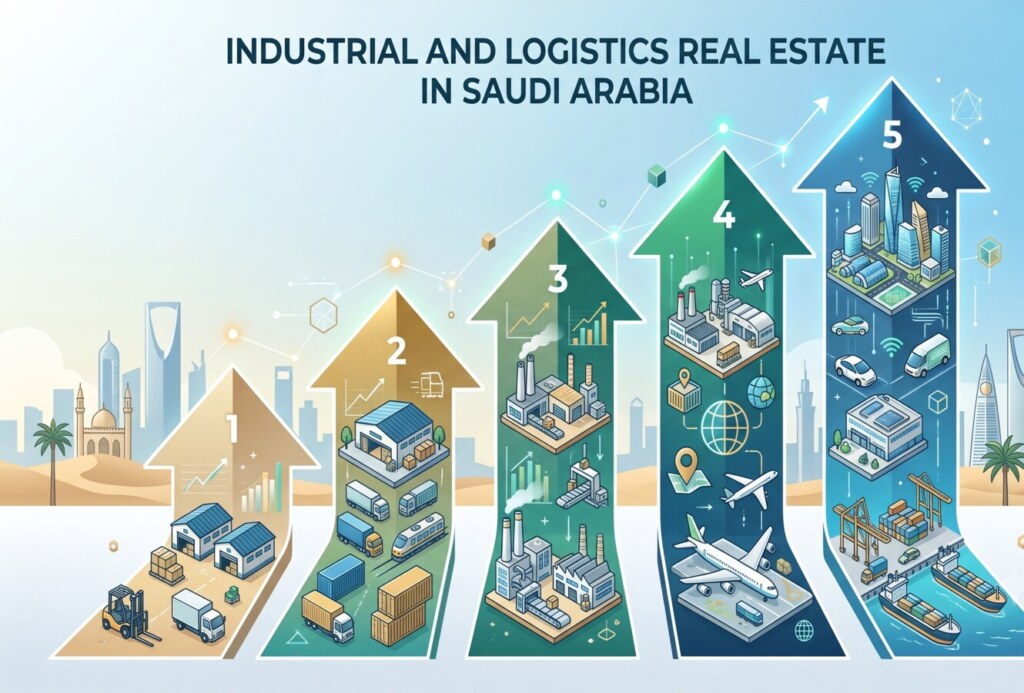
The current state of the Saudi industrial real estate market is heavily defined by a distinct supply and demand imbalance, which strongly favors property owners, developers and institutional investors.
Consultancy reports consistently highlight that the demand for modern, high-quality warehousing far outstrips the available supply. Many global and top-tier domestic companies struggle to find ready-built spaces that meet their stringent technical, safety, and environmental standards. Consequently, whenever premium logistics products enter the market, they are rapidly absorbed.
This intense demand has pushed occupancy rates in advanced logistics parks, particularly in major urban centers, to near-full capacity, often exceeding 95%. This near-zero vacancy environment drastically reduces the risk for investors and places continuous upward pressure on rental values.
Both Riyadh and Jeddah have seen a steady, quarter-on-quarter increase in the average lease rates per square meter for prime industrial space.
Financial Performance and Investment Metrics
Economic Metrics & Returns of Industrial and Logistics Real Estate in Saudi Arabia represent a quintessential income-generating asset.
Historically perceived as less glamorous than commercial or residential real estate, logistics properties now frequently outperform other asset classes in terms of sheer financial returns and stability.
Rental Yields
Typically range from 7% to 9% annually. These are among the highest yields in the commercial real estate spectrum, varying based on location and asset quality.

Also read about: Saudi Arabia Rental Yields.
Capital Appreciation
Asset values are steadily rising due to the scarcity of serviced industrial land and the influx of institutional capital, including Real Estate Investment Trusts (REITs)
Cash Flow Stability
Logistics leases are traditionally long-term, often spanning 5 to 15 years. This guarantees investors predictable, inflation-hedged income with remarkably low tenant turnover.
Key Market Hubs for Industrial and Logistics Real Estate in Saudi Arabia
The Kingdom is systematically organizing its industrial footprint through a master plan that includes dozens of logistics centers strategically distributed across the country. However, the bulk of premium real estate activity is concentrated in a few key mega hub:
Riyadh City (The Capital)
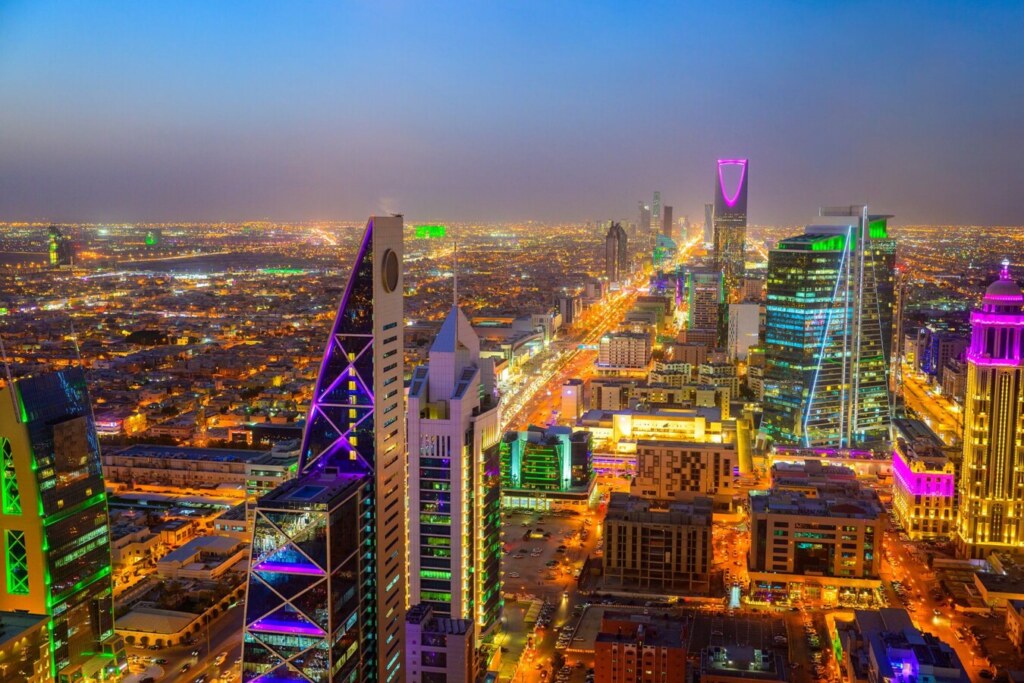
The geographic economic heart of the Kingdom. It serves as the primary distribution center for domestic consumption. It houses major zones like the Sudair Industrial and Business City, catering heavily to last-mile logistics and light manufacturing.
Jeddah
Positioned on the Red Sea coast, Jeddah is the definitive western gateway for international trade. Its proximity to the Jeddah Islamic Port makes it the critical hub for bonded warehouses, maritime logistics and import-heavy supply chains.
Also read about: Saudi Port Logistics Investment.
The Eastern Province (Dammam and Jubail)
Managed largely by entities like the Royal Commission for Jubail and Yanbu (RCJY) and MODON, this region is the epicenter for heavy industries, petrochemicals and export-driven manufacturing, facilitated by the King Abdulaziz Port.
Oxagon (NEOM)
Representing the futuristic frontier of the sector, Oxagon is designed as a floating industrial city. It aims to set global benchmarks for clean industries, fully automated supply chains and advanced manufacturing powered entirely by renewable energy.
Future Proofing: Emerging Market Trends
Investors entering the Saudi logistics market are no longer simply building basic storage sheds. To capture premium tenants and secure long-term value, developers are aligning with several defining global trends:
Build to Suit (BTS) Models
Given the severe shortage of specialized Grade A spaces, developers are increasingly bypassing speculative building.
Instead, they form pre-lease agreements with major corporations (such as Amazon, Noon, or large pharmaceutical firms) to custom-build facilities tailored precisely to the tenant’s operational needs.
Smart Warehousing and Automation
To combat rising operational costs and improve efficiency, there is a massive shift toward integrating advanced technologies. Modern facilities are being designed to accommodate heavy robotics, automated storage and retrieval systems (AS/RS) and sophisticated digital warehouse management platforms.
Sustainability and ESG Compliance
Green building is no longer a luxury but a requirement for international tenants. Developers are heavily investing in sustainable features.
Including solar panel integration on vast warehouse roofs, energy-efficient cooling systems and environmentally friendly construction materials to meet corporate ESG (Environmental, Social and Governance) targets.
In conclusion, Bayut Blog introduced to you the industrial and logistics real estate in Saudi Arabia as undergoing a historic evolution. Backed by state sponsored economic diversification, booming digital commerce and highly attractive financial yields.

 as a preferred source on Google