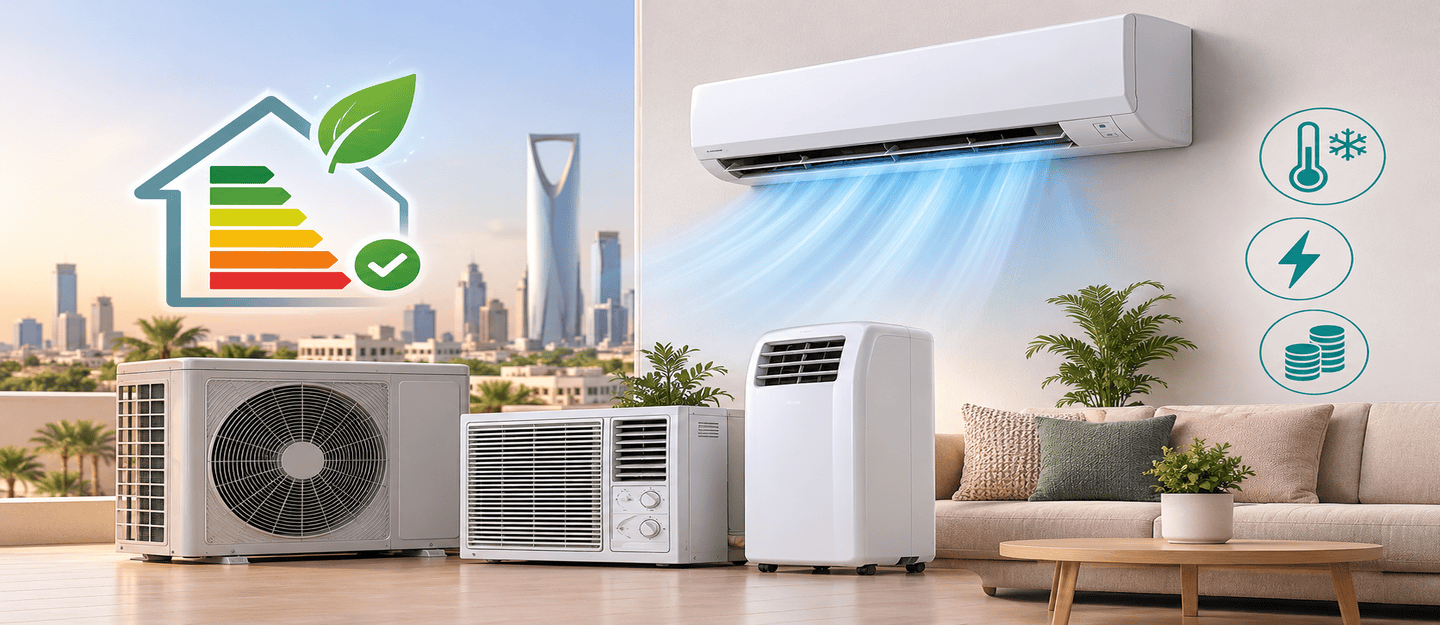
Choosing the right air conditioner is essential for Saudi homes, where summer temperatures can reach 35–45°C across much of the Kingdom. From apartments in Riyadh to family villas in Jeddah and homes in Dammam, selecting an energy-efficient AC system can improve indoor comfort and help manage electricity bills. Continue reading to explore the Types of Home Air Conditioning Systems: Which Is More Energy-Efficient?, compare popular options for Saudi households, and learn how to choose a suitable system for your home.
Which Air Conditioner Consumes Less Electricity?
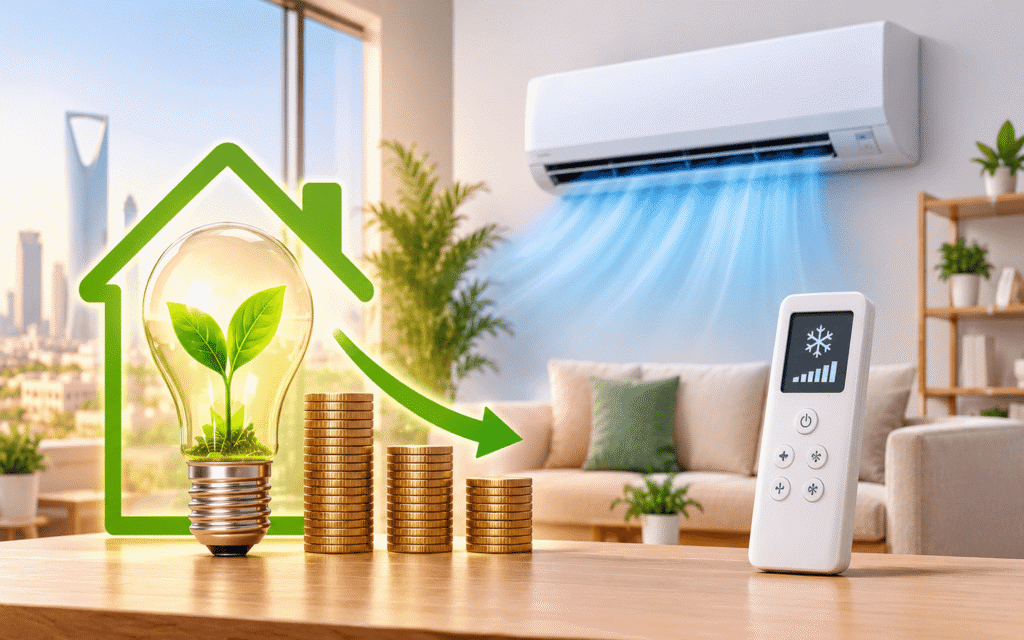
Saudi homes vary in size, design, and cooling requirements. An apartment may need efficient cooling for a few rooms, while a large villa may require a system that can maintain comfortable temperatures throughout the property.
Understanding the main air conditioning systems can help you choose the right option for your household:
1. Split Air Conditioning Systems
Split air conditioners are common in Saudi homes, particularly in apartments and individual bedrooms. Each system consists of an indoor unit and an outdoor unit connected by refrigerant pipes.
Inverter split ACs adjust compressor speed according to cooling demand, which can help reduce electricity consumption compared with less efficient fixed-speed models.
- Energy efficiency: High, depending on the model, capacity, and efficiency rating.
- Best for: Apartments, bedrooms, living rooms, and smaller residential spaces.
2. Central Air Conditioning Systems
Central air conditioning systems distribute cooled air through ducts to multiple rooms. They can be a practical solution for Saudi villas and larger family homes that need cooling throughout the property.
Their performance depends on the efficiency of the cooling equipment, duct insulation, air leakage, and how the system is operated.
- Energy efficiency: Potentially high when the system is properly sized, maintained, and installed with well-sealed ducts.
- Best for: Large villas, multi-room homes, and properties requiring whole-home cooling.
3. Multi-Split Air Conditioning Systems
Multi-split systems connect several indoor units to one outdoor unit. This arrangement can suit homes where different family members prefer different room temperatures or where outdoor installation space is limited.
- Energy efficiency: Can be high when the system is correctly sized and rooms are cooled according to actual needs.
- Best for: Larger apartments, multi-room homes, and selected villas.
4. Ductless Mini-Split Air Conditioning Systems
Ductless mini-splits provide targeted cooling without requiring a network of air ducts. Many models feature inverter technology, allowing the compressor to adjust its output as indoor conditions change.

- Energy efficiency: Often very high for individual rooms, especially when the system has a strong efficiency rating and is correctly installed.
- Best for: Bedrooms, home offices, apartments, and home extensions.
5. Window Air Conditioning Systems

Window AC units combine the main cooling components in one unit installed in a window or suitable wall opening. They can be an affordable option for cooling a single room without installing a separate indoor and outdoor unit.
- Energy efficiency: Varies by model. An efficient window unit can be suitable for a small room, although some models consume more electricity than comparable high-efficiency split systems.
- Best for: Small rooms, studios, and properties where installation options are limited.
6. Portable Air Conditioning Systems
Portable air conditioners can be moved between rooms and usually release hot air through an exhaust hose connected to a window. They may help in rented homes where permanent installation is not permitted.
- Energy efficiency: Often lower than comparable window and split systems, particularly when the exhaust arrangement allows heat to enter the room.
- Best for: Temporary cooling and spaces where fixed air conditioning cannot be installed.
7. Packaged Air Conditioning Systems
Among the Types of Home Air Conditioning Systems: Which Is More Energy-Efficient? packaged systems house the main cooling components in a single cabinet and distribute cooled air through ducts. Their suitability depends on the building layout and the selected model’s installation requirements.
- Energy efficiency: Depends on equipment specifications, duct design, maintenance, and operating conditions.
- Best for: Larger properties and residential buildings designed to accommodate packaged systems.
Which Air Conditioner Consumes Less Electricity?
Ductless mini-split systems with inverter technology are often among the most energy-efficient choices for cooling individual rooms. However, the most efficient option for your home depends on its size, insulation, cooling requirements, and how often the system operates.
According to the US Department of Energy, equipment efficiency ratings and installation quality both influence electricity consumption. Leaky ducts, incorrect sizing, and poor installation can reduce the performance of even an efficient air conditioner.
❄️ Energy Consumption Comparison of Home AC Systems
| AC System | Energy Efficiency Potential | Most Suitable For |
|---|---|---|
| Inverter mini-split | Very high | Individual rooms and small homes |
| Multi-split inverter | High | Multiple rooms with separate controls |
| Central AC | High (with efficient equipment and sealed ducts) |
Large homes and villas |
| Split AC | High (with an efficient inverter model) |
Apartments and bedrooms |
| Window AC | Moderate to high (depending on the model) |
Single rooms and studios |
| Packaged AC | Varies (by model and installation) |
Larger properties |
| Portable AC | Often lower (than comparable alternatives) |
Temporary cooling |
What Makes an Air Conditioner Energy-Efficient?
Several factors determine how much electricity an air conditioner uses.
- Inverter technology: Variable-speed compressors adjust their output to match cooling demand, reducing the need for frequent full-power starts and stops.
- High efficiency ratings: Compare SEER2 or other applicable seasonal ratings for split and central systems. For window units, check the Combined Energy Efficiency Ratio (CEER). Higher ratings generally indicate better efficiency within the same rating category.
- Correct cooling capacity: An oversized or undersized unit may operate inefficiently or struggle to maintain comfortable temperatures.
- Installation quality: Sealed ducts, appropriate refrigerant charging, and proper airflow help the system perform as intended.
- Regular maintenance: Clean filters and unobstructed airflow help maintain cooling performance.
How Can You Estimate Air Conditioner Electricity Consumption?
⚡ AC Energy Usage
Formula: Power (kW) × Hours = Daily kWh
Example: 1.2 kW × 8 hours
9.6 kWh
Also Read: 15 Energy-Saving Ideas for Homes in Saudi Arabia

What Are the Best Types of Air Conditioners?
The best air conditioner depends on your property’s layout, budget, and cooling priorities. Rather than selecting a system based on its name alone, compare its efficiency rating, installation requirements, and ability to cool the intended space.
Best Air Conditioner for Energy Savings
An inverter mini-split is a strong choice for energy savings when you need to cool one or a few rooms. Its ductless design avoids duct losses, while variable-speed operation can reduce unnecessary energy use.
For whole-home cooling, a high-efficiency central system may be a better fit, particularly when the property already has well-maintained, insulated ductwork.
Best Air Conditioner for Apartments
A wall-mounted inverter split system is often a practical choice for apartments. It offers quiet operation, flexible temperature control, and efficient cooling without requiring a network of ducts. A window unit can also work well for a single room when installation restrictions or upfront costs are important considerations.
Best Air Conditioner for Large Homes
Central air conditioning is suitable for larger homes that require consistent cooling across multiple rooms. A multi-split system is another option when individual rooms need separate temperature controls. Compare the total cost of installation, expected electricity use, and maintenance requirements before making a decision.
Best Air Conditioner for a Limited Budget
Window air conditioners generally have lower initial installation costs than permanently installed split or central systems. For renters or people who need temporary cooling, portable units may offer greater flexibility.
However, the cheapest system to purchase is not necessarily the cheapest to operate. Comparing efficiency ratings and expected running costs can help you identify better long-term value.
Frequently Asked Questions
Here are the most frequently asked questions about home air conditioning systems, energy efficiency, and choosing the right AC for Saudi homes:
An inverter mini-split is often highly efficient for individual rooms, while a high-efficiency central system may suit larger homes better.
They can use less electricity because their compressors adjust speed to match cooling demand. Actual savings depend on the model and operating conditions.
Not always. Central AC can work efficiently across an entire home, while split AC may use less electricity when only a few rooms need cooling.
Portable AC units are often less efficient than comparable window or split systems, although performance varies by model.
Not necessarily. An oversized unit can waste energy and may control humidity less effectively. Correct sizing is important for efficient cooling.
Choose the highest temperature setting that remains comfortable for your household. The ideal setting depends on outdoor conditions, humidity, and personal comfort.
Check and clean filters according to the manufacturer’s recommendations, and arrange professional servicing as needed to maintain performance.
To this point, we have explored the Types of Home Air Conditioning Systems: Which Is More Energy-Efficient? including central, split, multi-split, mini-split, window, portable, and packaged systems. We have also compared their energy efficiency, explained how to choose the right air conditioner, and shared practical ways to reduce electricity consumption.
We invite you to visit the comprehensive Bayut Blog for more useful home improvement tips, property advice, and guides to making informed decisions about your home.



 as a preferred source on Google