
Are you considering investing in real estate in Saudi Arabia but unsure how to determine whether a property is worth buying? Understanding the numbers behind a property is essential before making an investment decision. Continue reading to explore this Investment Property Analysis Guide for Beginners, covering essential financial metrics, property evaluation methods, and practical tips to help you assess real estate opportunities across the Saudi market.
Investment Property Analysis Basics
Investment property analysis is the process of evaluating a property’s financial potential before purchasing it. It helps investors understand the expected rental income, operating expenses, potential returns, and risks associated with owning a property.
For beginners in Saudi Arabia, this process is particularly important because property prices, rental demand, and investment opportunities vary between cities and neighbourhoods. A residential apartment in Riyadh, for example, may have different rental prospects and expenses compared to a villa in Jeddah or a commercial unit in Dammam.
Before choosing an investment property, consider the following fundamental factors:
1. Property Location
Location is a key factor in any Investment Property Analysis Guide for Beginners, as it influences rental demand and long-term property value. Areas close to business districts, schools, universities, hospitals, shopping centres, and public transport may attract more tenants. Saudi investors should compare neighbourhoods in major cities such as Riyadh, Jeddah, Dammam, and Al Khobar while considering local development projects, infrastructure improvements, and employment opportunities that may increase housing demand.
2. Property Purchase Price
The purchase price is one of the most important elements of investment property analysis. However, investors should not evaluate a property based on its asking price alone. Compare similar properties in the same neighbourhood, considering their size, age, condition, location, and available facilities. Reviewing actual property transactions can also help determine whether the asking price reflects current market conditions.
3. Rental Demand and Income Potential
Rental demand determines how easily an investor can find tenants and generate regular income. Consider the following factors when estimating rental potential:
- Average rental prices for comparable properties.
- Demand for apartments, villas, or commercial spaces.
- The number of available rental properties in the area.
- The neighbourhood’s accessibility and nearby facilities.
- Seasonal changes in rental demand, where relevant.
4. Additional Purchase and Ownership Costs
A property’s purchase price does not represent the full investment cost. Buyers should account for additional expenses that may affect their overall returns.
These may include:
- Real Estate Transaction Tax (RETT), where applicable.
- Real estate brokerage fees.
- Property valuation and inspection costs.
- Financing and mortgage-related expenses.
- Renovation and furnishing costs.
- Maintenance and property management expenses.
- Service charges and insurance, where applicable.
In Saudi Arabia, the standard Real Estate Transaction Tax rate is 5%, subject to applicable exemptions and special provisions. Investors should verify the tax treatment of their specific transaction with the relevant authorities.
Key Financial Analysis Metrics
Understanding financial metrics helps beginners compare investment opportunities and estimate how much income a property may generate. The following indicators are among the most useful tools for evaluating residential and commercial investment properties in Saudi Arabia:
1. Gross Rental Yield
What it is: Annual income compared to property price (before expenses).
Formula: (Annual Rent ÷ Purchase Price) × 100
Example: SAR 48,000 rent ÷ SAR 800,000 price = 6%

2. Net Rental Yield
What it is: Realistic return after deducting operating expenses (maintenance, management).
Formula: [(Rent − Expenses) ÷ Total Cost] × 100
Example: SAR 40,000 net rent ÷ SAR 840,000 total cost = 4.76%
3. Cash Flow
What it is: The actual cash you keep every month after paying all bills.
Formula: Monthly Rent − Monthly Expenses
Example: SAR 4,000 rent − SAR 700 expenses = SAR 3,300 / month
4. Return on Investment (ROI)
What it is: Total profit generated compared to your total invested cash.
Formula: (Net Profit ÷ Total Investment Cost) × 100
Example: SAR 40,000 profit ÷ SAR 840,000 investment = 4.76%
5. Capitalisation Rate (Cap Rate)
What it is: Property yield based on Net Operating Income (NOI), excluding mortgages.
Formula: (Annual NOI ÷ Property Purchase Price) × 100
Example: SAR 55,000 NOI ÷ SAR 1,000,000 price = 5.5%
Comparison of Key Property Investment Metrics
The following table compares the key property investment metrics, explaining what each one measures and why it matters when evaluating a real estate investment:
Financial Metric | What It Measures | Why It Matters |
|---|---|---|
Financial Metric Gross Rental Yield | What It Measures Annual rent compared to purchase price | Why It Matters Estimates rental income potential |
Financial Metric Net Rental Yield | What It Measures Rental income after operating expenses | Why It Matters Provides a clearer picture of returns |
Financial Metric Cash Flow | What It Measures Income remaining after expenses | Why It Matters Shows the property’s ability to cover costs |
Financial Metric Return on Investment (ROI) | What It Measures Profit compared to total investment cost | Why It Matters Measures investment performance |
Financial Metric Capitalisation Rate | What It Measures Net operating income compared to property value | Why It Matters Helps compare investment properties |
How to Analyse an Investment Property in Saudi Arabia
After understanding the main financial indicators, beginners can follow a structured process to evaluate potential investments:
Step 1: Research the Local Real Estate Market
Start by researching the city and neighbourhood where you plan to invest. Compare property prices, rental rates, transaction volumes, and the number of available properties. The REGA Real Estate Indicators Platform is a useful resource because it provides information about property sales and rental activity across Saudi cities and neighbourhoods.

Step 2: Calculate the Total Investment Cost
Prepare a complete estimate of the money required to purchase and prepare the property. Include the purchase price, applicable transaction taxes, brokerage fees, financing expenses, renovations, and other initial costs.
Step 3: Estimate Realistic Rental Income
Research comparable rental properties in the same neighbourhood and property category. Avoid assuming that your property will achieve the highest advertised rental price. Instead, use realistic estimates based on registered rental transactions and the property’s actual condition and features.
Step 4: Calculate Expected Expenses
List all expected operating expenses, including:
- Routine maintenance and repairs.
- Property management fees.
- Service charges.
- Insurance costs.
- Utilities paid by the owner.
- Financing payments, where applicable.
Step 5: Compare Different Investment Opportunities
Once you have calculated the expected financial performance, compare several properties rather than focusing on one option. For example, an apartment with a lower purchase price may offer a better net rental yield than a more expensive property in a popular neighbourhood. Consider rental demand, property condition, location, expected expenses, and potential resale opportunities before making a decision.
Step 6: Review the Legal and Regulatory Requirements
Before completing a purchase, verify the property’s ownership documents, applicable permits, and any legal restrictions. In Saudi Arabia, investors should understand the relevant real estate regulations and transaction requirements. They should also verify the applicable Real Estate Transaction Tax and brokerage arrangements.
Common Investment Property Analysis Mistakes to Avoid
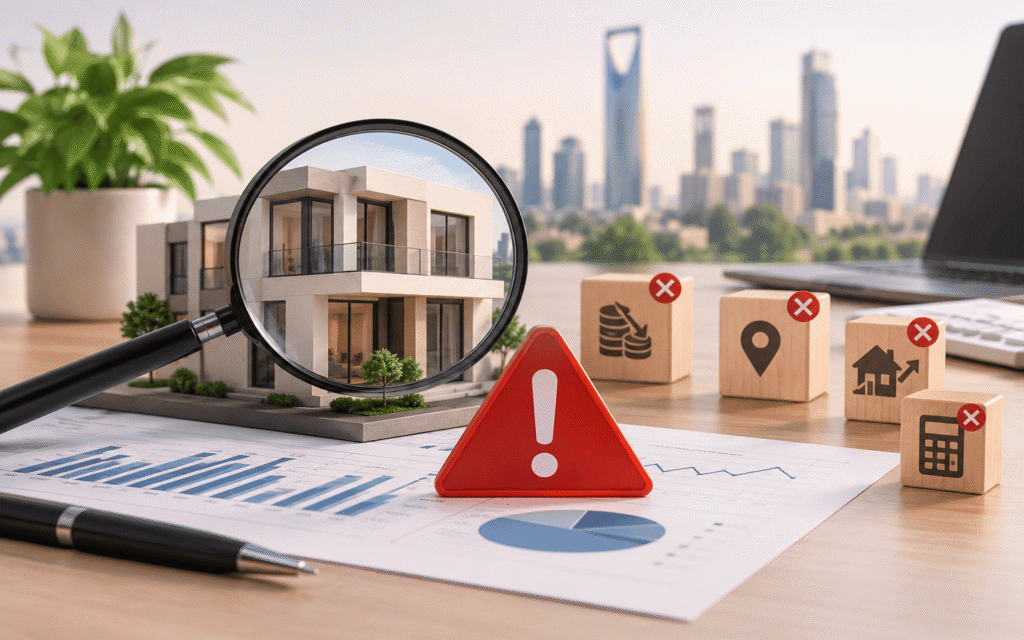
Beginners following an Investment Property Analysis Guide for Beginners may focus too heavily on the property’s purchase price or expected rental income while overlooking other factors that influence investment performance.
Here are some common mistakes to avoid:
1. Ignoring Operating Expenses
A property may generate attractive rental income, but maintenance, service charges, and management expenses can reduce the actual return.
2. Overestimating Rental Income
Using the highest advertised rental prices can create unrealistic expectations. Always compare similar properties and consider actual rental transactions.
3. Overlooking Vacancy Periods
A property may not remain occupied throughout the year. Allowing for periods without tenants helps create more realistic financial projections.
4. Focusing Only on Property Appreciation
An increase in property value does not guarantee regular income. Investors should evaluate rental performance and potential resale value separately.
5. Ignoring Market Conditions
Rental demand and property prices can change over time. Reviewing updated market indicators helps investors understand current conditions rather than relying on outdated information.
Also Read: Riyadh Rent Freeze 2026 Explained for Property Investors
Tips for First-Time Real Estate Investors in Saudi Arabia
Starting with a clear investment strategy can make property evaluation easier and help beginners avoid unnecessary financial risks.
Consider these practical tips:
- Set a realistic budget: Determine how much you can allocate to the purchase and additional expenses.
- Choose your investment objective: Decide whether you prioritise regular rental income, long-term capital appreciation, or a combination of both.
- Research different cities: Compare opportunities in Riyadh, Jeddah, Dammam, and other growing urban areas.
- Use reliable market data: Check official real estate indicators and registered rental information.
- Evaluate the property’s condition: Arrange a professional inspection before completing the purchase.
- Prepare for unexpected costs: Keep a financial reserve for repairs, maintenance, and vacancy periods.
- Review your calculations regularly: Update your estimates when rental prices, expenses, or market conditions change.
Frequently Asked Questions
Here are some of the most frequently asked questions about investment property analysis for beginners in Saudi Arabia:
It involves evaluating a property’s price, rental income, expenses, and potential returns to assess its investment value.
It depends on the property’s location, type, price, and expenses. Compare similar properties to assess potential returns.
Divide the annual net profit by the total investment cost, then multiply by 100.
Riyadh, Jeddah, Dammam, and Al Khobar offer opportunities worth exploring, depending on budget and rental demand.
Gross yield excludes expenses, while net yield deducts operating costs to show a more realistic return.
To conclude, this Investment Property Analysis Guide for Beginners has explained the essential financial metrics, property evaluation methods, and practical considerations that can help new investors assess real estate opportunities in Saudi Arabia.
For more real estate insights, market updates, and helpful guides, we invite you to visit the Bayut Blog and explore more articles to support your property investment journey.




 as a preferred source on Google