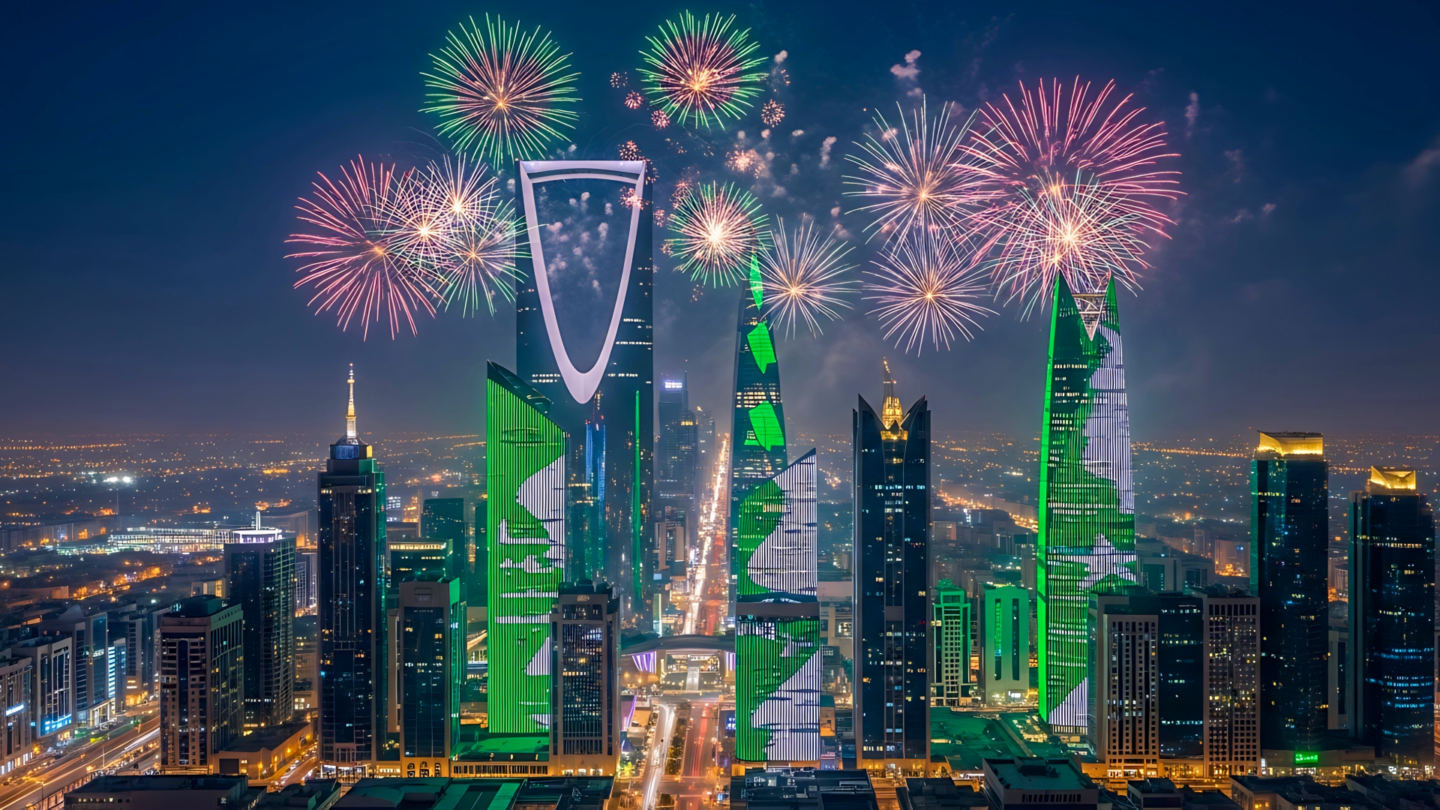
Saudi National Day 2026 arrives at a moment when the Kingdom is rewriting its economic story. Over the past few years, Saudi Arabia has moved far beyond an oil-led growth model. New cities are rising, tourism is expanding, homeownership is climbing, and foreign investors are being given clearer routes into the market. Vision 2030 has turned national ambition into visible change.
Real estate is one of the clearest places to see it. Riyadh is growing at scale. Jeddah is strengthening its coastal and apartment markets. ROSHN is reshaping residential communities, while the Red Sea and NEOM are pushing the investment map into new territory. That makes this National Day more than a celebration of history. It is also a snapshot of a country building its next chapter in real time.
Saudi National Day 2026: The Property Story in Numbers
Together, these wins show a market becoming more accessible, transparent and diverse.
Homeownership Is Moving Closer to the Vision 2030 Goal
The rise in homeownership is one of the clearest signs of structural change in Saudi housing.
Vision 2030’s 2025 annual report links the improvement to expanded mortgage access, targeted financing and continued housing supply. It also notes that rising demand has pushed housing costs higher in some high-demand areas, prompting further measures to support affordability and expand supply.
For investors, that matters because the property story is not being driven only by mega-projects or foreign capital. A large domestic end-user market sits underneath it.
Riyadh and Jeddah Are Telling Different Investment Stories
Riyadh remains one of the Kingdom’s busiest property markets. REGA’s current city dashboard shows 13.6K transactions worth SAR29.1 billion, with Ar Rimal the most active district and residential land the most active property type.

Jeddah follows a different pattern. REGA currently shows 9.2K transactions worth SAR14.3 billion, with As Safa the most active district and apartments leading activity.
SAR 29.1B In Value
Residential Land Leads Activity
SAR 14.3B In Value
Apartments Lead Activity
The contrast is useful. Riyadh leans toward land, urban expansion and large-scale residential development. Jeddah blends established city demand with apartments, tourism and Red Sea connectivity.
Foreign Ownership Changed the Market in 2026
One of the year’s biggest reforms came on 22 January, when Saudi Arabia’s updated Real Estate Ownership System for Non-Saudi Nationals entered into force.
REGA says the system covers residents, non-residents and non-Saudi companies and entities. Applications are handled through the Saudi Properties portal and remain subject to the applicable legal and geographic controls.
That gives international investors a clearer formal route into eligible Saudi property. It also increases the importance of comparing cities, projects and ownership structures before committing capital.
Better Data Is Making Saudi Real Estate Easier to Read
A market becomes easier to invest in when investors can see it clearly.
REGA’s Real Estate Indicators Platform gives users official data on prices, sales and rentals across Saudi cities and regions. It can be filtered by location, property type and period. REGA says the platform is designed to improve transparency, strengthen confidence, support data-driven decisions and stimulate investment.
Its sources include the Ministry of Justice, Real Estate Registry, Ejar Network and Saudi Central Bank. Indicators are updated monthly or quarterly depending on the data series. That may sound less dramatic than a new skyline, but it matters. Better market data means less guesswork.
The Saudi Investment Map Is Getting Bigger
The transformation is also widening the menu available to property investors.
ROSHN represents large integrated residential communities. The Red Sea adds branded residences and tourism-led property. NEOM offers a much earlier-stage destination proposition. Riyadh and Jeddah continue to provide the deeper urban markets underneath them.
Different assets serve different investment goals. The common thread is that investors now have more choice than they did a few years ago.
Jobs • Housing • Long-Term Demand
Homes • Amenities • Master Planning
Tourism • Branded Residences • Growth
What Should Investors Watch After Saudi National Day 2026?
National Day is a milestone, not an investment signal on its own. The useful question is what investors should watch next.
Key factors include:
- Foreign Ownership Geographic Rules
- Riyadh And Jeddah Transaction Activity
- Entry Prices
- Rental Demand
- New Project Releases
- Handover Progress
- Indicative Net ROI
- Service And Ownership Costs
- Resale Liquidity
The national story may be broad. Property returns are still made one asset at a time.
Saudi National Day 2026: A Milestone for Investors Too
Saudi National Day 2026 celebrates 96 years since the Kingdom’s unification. It also arrives at a point when Saudi real estate looks very different from only a few years ago.

That does not make every property attractive. It does give investors more access, more information and more choice. For anyone watching Saudi Arabia from abroad, that is a National Day story worth paying attention to.
Frequently Asked Questions
When Is Saudi National Day 2026?
Saudi National Day falls on 23 September each year. In 2026, Saudi Arabia marks its 96th National Day, celebrating the unification of the Kingdom in 1932.
What Is the Saudi National Day 2026 Theme?
The 2026 identity uses the slogan “Our Pride Lies in Our Nature.” The theme reflects traits associated with Saudi society, including courage, vision, authenticity, determination and generosity.
What Is Saudi Arabia’s Homeownership Rate?
Saudi family homeownership reached 66.24% in 2025, compared with a 65% annual target. The Vision 2030 target is 70%.
Can Foreigners Buy Saudi Property in 2026?
Yes. Saudi Arabia’s current framework covers eligible residents, non-residents and non-Saudi entities, subject to the relevant ownership rules and geographic controls.
What Is the REGA Real Estate Indicators Platform?
It is REGA’s official platform for property-market data and indicators. It provides information on prices, transactions and rentals and is intended to improve transparency and support data-driven investment decisions.



 as a preferred source on Google