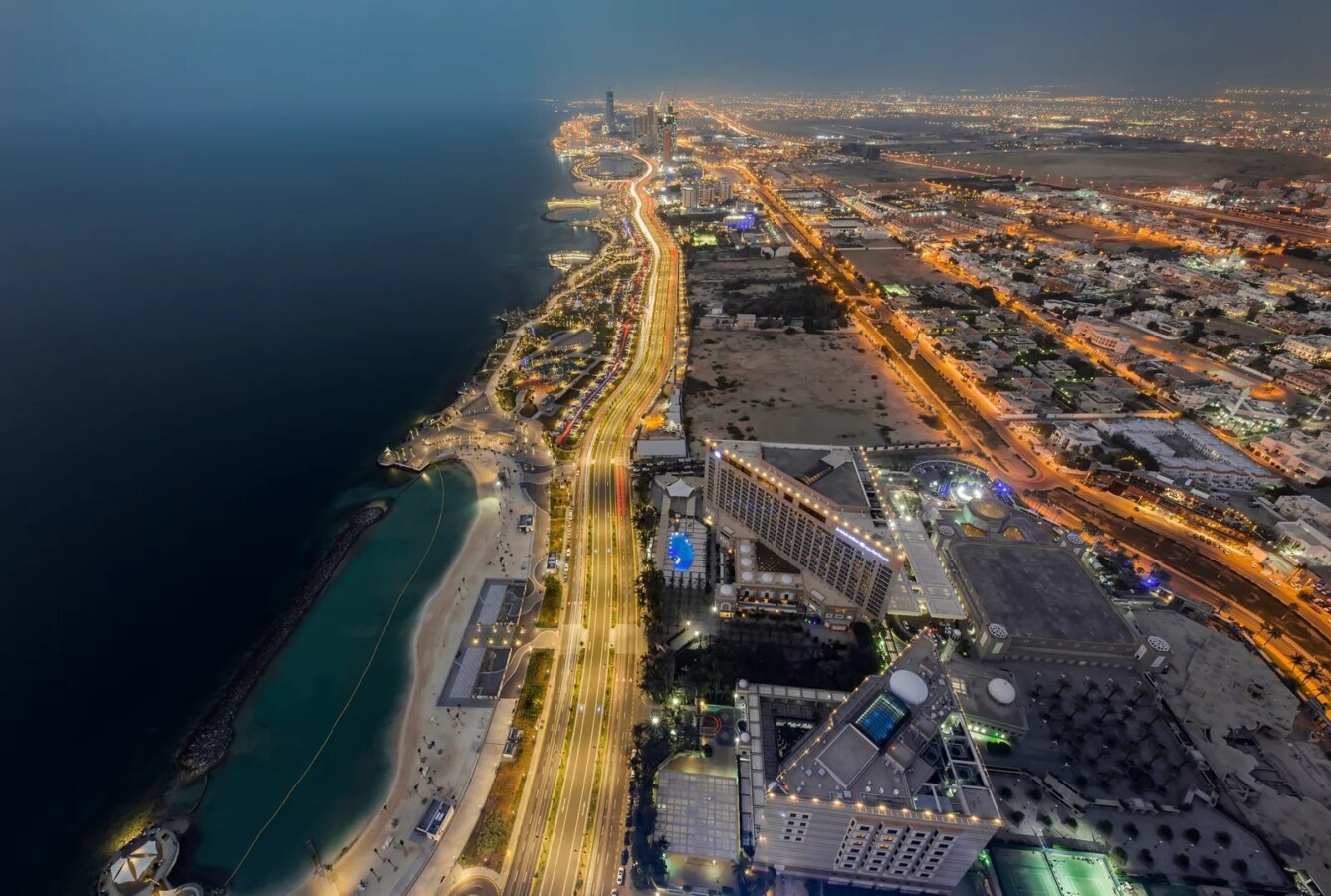
Jeddah has always evolved through movement. Trade shaped its coastline, commercial corridors defined its core, and residential districts expanded gradually toward the north. Today, that expansion feels more deliberate. Specific waterfront, central, and northern corridors concentrate development. For investors assessing Jeddah neighborhoods for real estate investment, the focus has shifted from broad citywide growth to neighbourhood-level precision.
The opportunity now lies in identifying which districts are absorbing demand. These districts are benefiting from infrastructure upgrades. So, Jeddah is positioned for sustained value rather than short-term momentum.
Current Property Mix Across Jeddah
Understanding what dominates the market is the first step in evaluating an opportunity. The structure of supply reveals where liquidity and demand naturally concentrate.
The residential market remains apartment-led.
- Apartments and condo-style units account for 55% to 60% of listings
- Standalone villas represent 25% to 30%
- Duplexes and villa floors contribute around 10%
- Gated compounds serve a smaller, expat-focused segment
Apartments dominate because they offer lower entry thresholds. They align with Jeddah’s gradual vertical expansion in coastal and central districts, where land is tightening. For yield-focused investors, this structure supports liquidity.
New-Build Supply in Jeddah
Supply growth tells you where developers believe future demand will sit. In Jeddah, that confidence is clearly shifting northward.
New development activity is concentrated in growth corridors.

- Approximately 2,100 units were delivered in the first half of 2025
- Around 12,700 additional units were expected by year-end
- Further completions are projected through 2026 and 2027
The strongest supply clusters are in:
- Obhur
- Al Murjan
- Al Basateen
- Northern coastal zones linked to master-planned expansion
Infrastructure-Led Demand Corridors
Infrastructure changes perception before it changes skylines. In Jeddah, several corridors are already benefiting from that shift.
Major infrastructure upgrades are concentrated along:
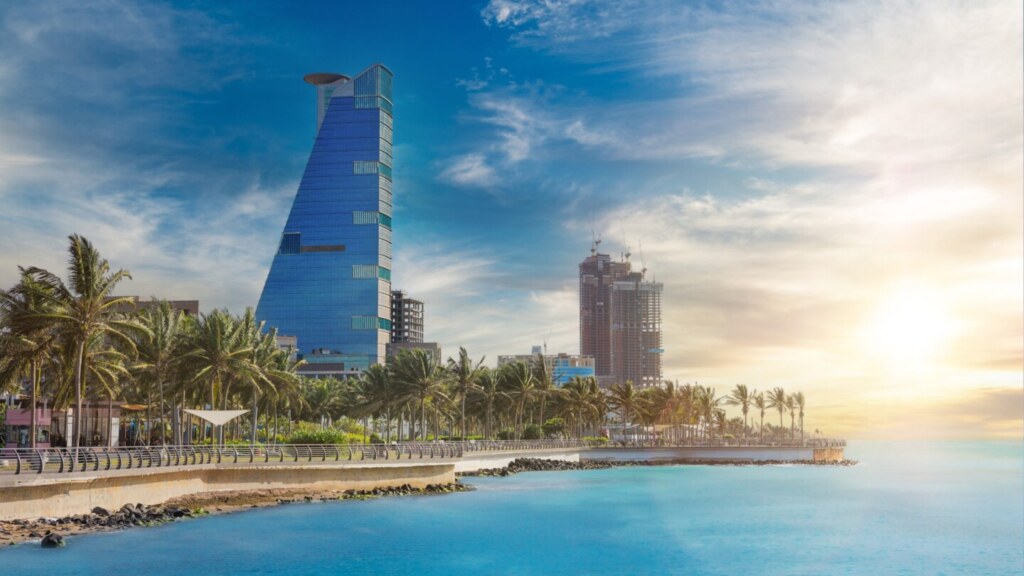
- The Corniche and waterfront corridor, including Al Shati, Al Nahdah, and Al Zahra
- North Jeddah around Obhur
- Central districts influenced by Jeddah Central redevelopment
Historically, property near announced infrastructure tends to see:
- 5% to 10% uplift on announcement
- An additional 10% to 15% appreciation near completion
Impact varies by district and property type, but infrastructure consistently influences perception and pricing.
Urban Uplift in Jeddah
Neighbourhood transformation rarely happens overnight. It begins with subtle reinvestment and gradually reshapes demand patterns.
Certain neighbourhoods are showing clear reinvestment signals.

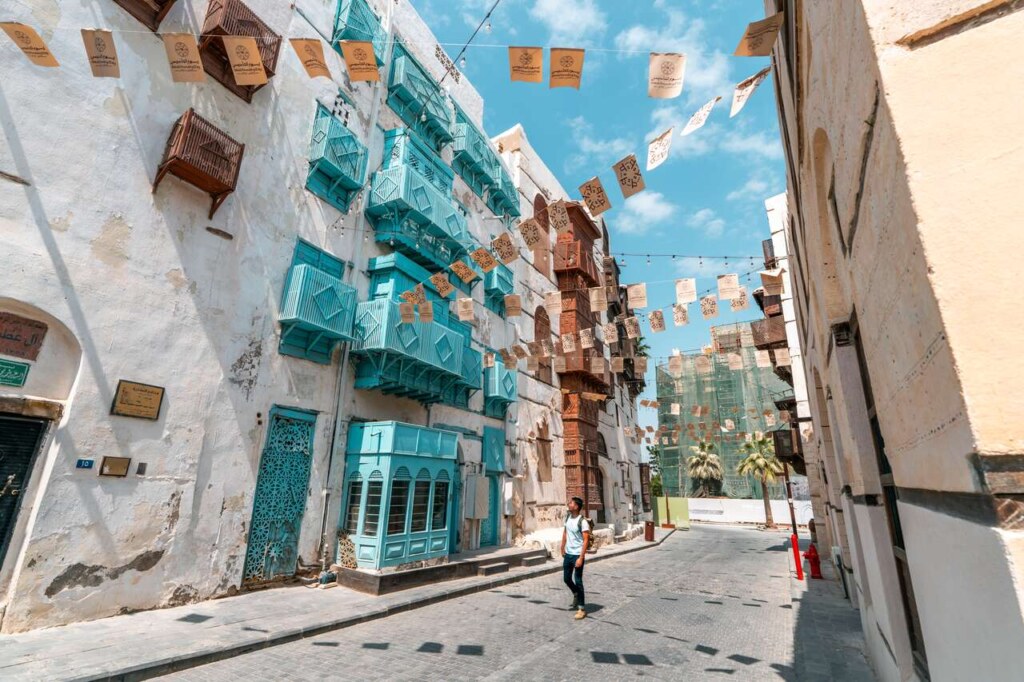
- Al Balad is seeing boutique retail and heritage restorations
- Al Hamra and Al Andalus show facade upgrades and apartment modernisation
- Parts of Al Safa and Al Marwah are attracting younger buyers
Over the past two to three years, these areas have experienced estimated price appreciation of 10% to 20%, outperforming broader averages.
Urban renewal adds a lifestyle premium that often precedes valuation shifts.
A Glance at the Market Sentiment
Every market has its own internal debate. In Jeddah, pricing perception varies widely by district and property type. As of early 2026, prime coastal and northern neighbourhoods are perceived as expensive. The broader market remains negotiable.
Jeddah’s estimated price-to-income ratio ranges from 7 to 9 times the median household income for a typical apartment. This places it:
- Slightly below Riyadh
- Above secondary Saudi cities
- In a middle-tier affordability bracket
Transaction volumes remain healthy, suggesting demand resilience despite pricing discussions.
Jeddah’s Resilience in terms of Risk
Compared with higher-cycle MENA hubs such as Dubai or Doha, Jeddah has demonstrated steadier price behaviour.
- Historical fluctuations generally within 5% to 15%
- Less pronounced boom-and-correction cycles than investor-heavy regional capitals
The city’s demand base is diversified across:
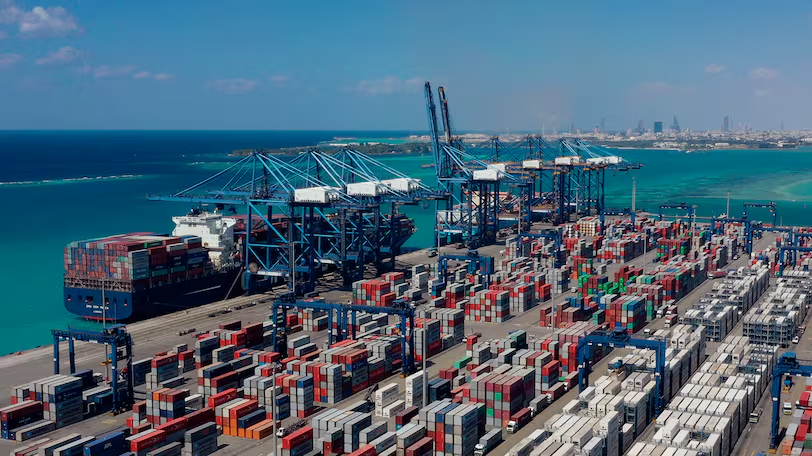
- Port and logistics activity
- Tourism and gateway traffic
- Local end-user housing needs
Short-Term Pricing Outlook
Short-term movements often reveal how confident buyers truly are. Current signals point to cautious stability rather than overheating.
The 12-month outlook is steady to slightly positive.
Key drivers include credit conditions, employment growth in logistics and tourism, and infrastructure milestones.
Invest Through Bayut-KSA
Clarity matters more than momentum when entering a developing market. Strategic comparison reduces risk. Understanding Jeddah Neighborhoods for Real Estate Investment Type requires district-level clarity.
On Bayut-KSA’s investor hub, investors can:
- Compare the coastal, central, and northern zones
- Filter by apartments, villas, or off-plan units
- Identify income-focused versus appreciation-driven strategies
- Get proper consultation to make a confident investment decision
The advantage lies in selecting the right neighbourhood at the right phase of its cycle!


 as a preferred source on Google