
A Saudi property can generate returns in two main ways. It can produce rental income while you hold it, or it can increase in value and create a gain when you eventually sell. That is the core difference between buy-to-let vs capital growth in Saudi Arabia. Neither strategy is automatically better.
The right choice depends on whether you need income now, can hold for longer, and how much risk you are comfortable taking on future price growth.
Saudi Arabia’s 2026 market makes that distinction especially important. Rental yields remain attractive in several major cities, but price growth is becoming more selective by city and property type. National residential transaction volumes were also 12% lower year on year in Q2 2026, even though activity improved from Q1.
What Does Buy-to-Let Mean in Saudi Arabia?
A buy-to-let investor purchases property primarily to generate rental income.
The basic measure is gross rental yield.
Gross rental yield = Annual rent ÷ Purchase price × 100
This is why the apartment charging the highest monthly rent is not necessarily the strongest buy-to-let investment. Purchase price matters just as much.
Bayut-KSA’s rental yield guide explains why investors should compare net return rather than relying on the headline rent alone.
What Does Capital Growth Mean?
Capital growth is the increase in the value of a property between purchase and resale.
If a property is bought for SAR 1 million and later sold for SAR 1.2 million, the nominal capital gain is SAR 200,000 before transaction and selling costs.
The important point is that capital growth is not uniform across Saudi property types. So even within the same city, one property type can appreciate while another loses value.
A SAR 1 Million Property Shows the Difference
A simple worked example makes the two strategies easier to compare.
Assume two properties both cost SAR 1 million. Property A produces a 7% gross rental yield. It generates SAR 70,000 in annual gross rent. Property B produces only a 4% rental yield but rises 6% in value during the year. It generates SAR 40,000 in rent and SAR 60,000 in unrealised appreciation.
That does not automatically make Property B better. The gain only becomes realised when the property is sold, while Property A is generating more cash during the holding period.

SAR 70,000 gross annual rent
Income-led strategy
SAR 60,000 value increase
Growth-led strategy
The key difference is liquidity. Rental income can arrive during ownership. Capital growth remains on paper until the asset is sold.
Buy-to-Let vs Capital Growth at a Glance
When Does Buy-to-Let Make More Sense?
Buy-to-let makes more sense when regular income is one of the main objectives.
The investor should therefore analyse the property as an operating asset rather than simply looking at its purchase price.
A stronger buy-to-let property usually has:
- Documented tenant demand
- Realistic rent relative to purchase price
- Manageable service charges
- Low vacancy risk
- A broad tenant pool
- Reasonable maintenance costs
Gross yield is only the first screen. Bayut-KSA itself advises investors to account for vacancy, maintenance, financing and service charges before estimating the real return.
Riyadh Buy-to-Let Has One Extra Constraint
Riyadh currently operates under a five-year suspension on annual increases in total rental value for residential and commercial properties within the city’s urban boundaries. The measure took effect on 25 September 2025 and applies to both existing and new leases.
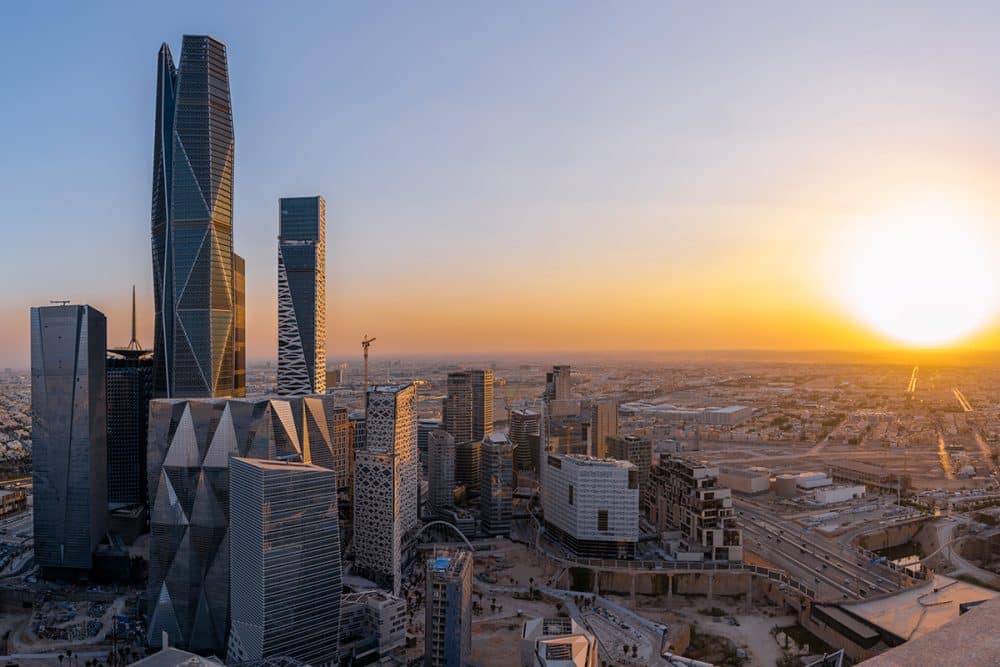
That does not make Riyadh unattractive for landlords. The city still has an indicative average gross yield of 8.89% on Bayut-KSA data. It does mean investors should be cautious about a model that relies on increasing the rent every year.
A Riyadh buy-to-let investment should therefore work at the rent that can realistically be achieved today.
Bayut-KSA’s Riyadh rent freeze guide covers the current framework in more detail.
When Does Capital Growth Make More Sense?
Capital growth fits investors who are comfortable holding for longer and do not need the property to maximise cash flow immediately.
The strongest growth case normally requires a clear reason why future demand could become stronger than it is today.
That may come from new infrastructure, employment growth, major commercial development, improved connectivity or restricted competing supply.
However, investors should not confuse development announcements with guaranteed appreciation.
Knight Frank recorded 45,740 residential transactions across Saudi Arabia in Q2 2026, down 12% year on year, while total transaction value fell 24.6% to SAR 41.9 billion. At the same time, apartment prices still increased in Riyadh, Jeddah and Dammam.
That is a useful reminder that transaction activity and price growth can move differently.

Real Saudi Investment Zones Show the Difference
The clearest comparison comes from Bayut-KSA’s own Investor Hub. Current zone-level data shows three very different return profiles:
This is exactly why rental yield alone does not tell the full story.
KAFD currently offers the highest rental yield of these three examples, but Almanar shows the highest indicative overall ROI because more of its return comes from capital gain.
What Does the Risk Look Like?
The risks are also different. A buy-to-let investor faces vacancy risk, maintenance, service charges, tenant management and restrictions on rental increases in Riyadh.
A capital-growth investor faces a different problem. The expected increase in value may never arrive.
That risk is visible in current market data. In Q2 2026, villa values declined across Riyadh, Jeddah and Dammam even while apartment values increased. Saudi residential transaction volumes were also lower nationally than a year earlier.
Capital-growth investors also need to watch new supply. Knight Frank expects Riyadh’s residential stock to rise from approximately 2.81 million units in 2026 to 3.30 million by 2030, although higher construction costs mean not every announced project will necessarily be delivered on schedule.
New infrastructure can support demand, but new supply can also compete with existing properties.
Can You Target Income and Growth Together?
Yes. In practice, many investors should not choose one strategy at the complete expense of the other.
A property that produces a reasonable yield while sitting in a district with strong long-term demand can generate rental income and still provide exposure to appreciation.
The important measure becomes simple gross return, combining rental return and capital appreciation before costs.
For example, an asset generating a 6% rental yield and 4% appreciation would have a simple gross return of around 10% for that period before vacancy, maintenance, service charges, financing, transaction costs and taxes.
That is more useful than judging a property only by the monthly rent.
Which Strategy Fits You?
Buy-to-let may fit better if you want recurring income, need the property to contribute cash flow during ownership and prefer analysing existing tenant demand rather than predicting future appreciation.
Capital growth may fit better if you have a longer investment horizon, can tolerate lower initial income and are buying into a location where there is evidence that demand, infrastructure or development could strengthen.
For investors who do not need to maximise either extreme, a balanced property can be more attractive.
✓ Yield matters now
✓ Tenant demand is established
✓ The property works at today’s rent
✓ You can manage vacancy and costs
✓ Immediate income matters less
✓ The area has clear growth drivers
✓ Future supply looks manageable
✓ Resale demand could strengthen
Do Not Ignore the Exit
Both strategies eventually depend on another buyer. A yield-focused investor can still struggle if the property becomes difficult to sell. A growth-focused investor can also be disappointed if the expected resale market fails to develop.
Before buying, ask who could realistically purchase the property from you in five or ten years.
The Saudi property market in 2026 is increasingly differentiated by affordability, location, product quality and infrastructure. That makes liquidity and property selection more important than simply choosing a popular city.
Buy-to-Let vs Capital Growth in Saudi Arabia: Which Wins?
There is no universal winner in buy-to-let vs capital growth in Saudi Arabia.
Buy-to-let gives the investor something measurable today. Rent can be compared with the purchase price, expected vacancy and operating costs.
Capital growth offers greater upside in some locations, but it depends more heavily on what happens in the future.
The strongest decision therefore comes from comparing both. A property with sustainable rental income, a sensible entry price and credible long-term demand can provide a more balanced investment than one chosen solely because it has the highest advertised yield or the strongest growth story.
Frequently Asked Questions
Is buy-to-let profitable in Saudi Arabia?
It can be. Bayut-KSA currently reports a national average gross rental yield of 6.84%, with higher city-level benchmarks in Riyadh and Jeddah. Actual profitability depends on purchase price, vacancy, maintenance, service charges and management costs.
What is a good rental yield in Saudi Arabia?
There is no single number for every property. Current Bayut-KSA averages include 8.89% in Riyadh, 7.89% in Jeddah and around 6.2% in Dammam, while individual districts and properties can vary substantially.
Is Riyadh better for rental income or capital growth?
It can offer both. Bayut-KSA currently reports an 8.89% average gross rental yield, while Knight Frank recorded 3.1% year-on-year apartment value growth in Q2 2026. However, Riyadh’s five-year rent increase suspension needs to be included in any landlord strategy.
Can a Saudi property provide both rent and capital growth?
Yes. Bayut-KSA’s Investor Hub shows zones where both are present. KAFD, for example, currently displays a 6% rental yield alongside 4.7% capital gain, while other zones lean more heavily towards appreciation.
Is capital growth guaranteed?
No. Property values can stagnate or decline. In Q2 2026, villa values fell year on year in Riyadh, Jeddah and the Dammam Metropolitan Area even though apartment values increased in all three.


 as a preferred source on Google