Finding the best city to invest in Saudi Arabia depends on what you want from the property. Riyadh, Jeddah and Dammam all offer attractive opportunities, but they differ in market size, entry price, rental demand and recent transaction momentum.
The latest 2026 data shows that Riyadh remains the deepest residential market, Jeddah is seeing stronger transaction-value growth, while Dammam is gaining momentum from a smaller base. There is no automatic winner. The right choice depends on whether you prioritise scale, rental income, affordability or longer-term growth.
How Are Riyadh, Jeddah and Dammam Performing in 2026?
The three residential markets are moving at different speeds.
According to Knight Frank’s Q2 2026 residential market data, Riyadh recorded 10,667 residential transactions worth SAR 14.3 billion during the quarter. Jeddah recorded 6,669 transactions worth SAR 10.3 billion, while the Dammam Metropolitan Area recorded 3,896 transactions worth SAR 4.9 billion.
The direction of activity is equally important. Riyadh transaction volumes were down 2% year on year, although activity recovered from the previous quarter. Jeddah volumes slipped just 1%, while transaction values increased 31% year on year. Dammam recorded the strongest transaction momentum, with volumes up 21% and values up 20%.
Riyadh for Market Depth and Long-Term Demand
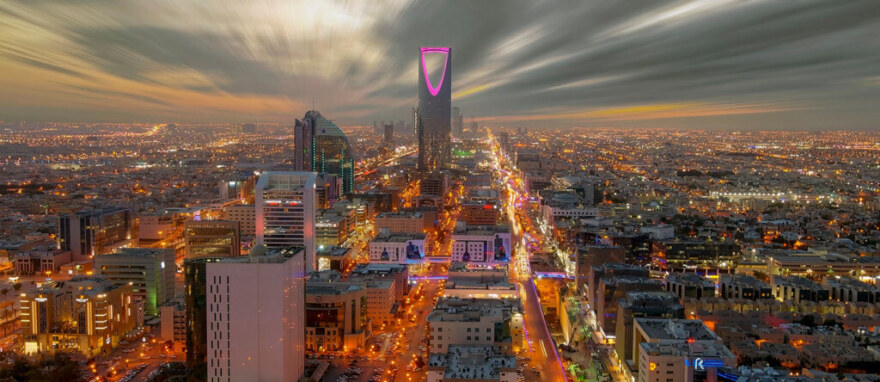
Riyadh remains the natural starting point for many investors because it combines the Kingdom’s largest residential market with government, corporate and employment demand.
The capital recorded the highest transaction volume of the three cities in Q2 2026. Apartment values also increased 3.1% year on year to SAR 6,369 per square metre, ahead of the growth recorded in Jeddah and the Dammam Metropolitan Area.
International interest remains strongest in Riyadh as well. Knight Frank’s 2026 investor research found that 55% of surveyed international investors preferred Riyadh, compared with 46% for Jeddah and 22% for Dammam.
However, Riyadh is no longer a market where investors should assume every property will benefit equally. Higher entry prices, new housing supply and the current rent increase suspension mean property selection matters more.
Bayut-KSA’s Riyadh rent freeze guide explains how the five-year rent increase suspension changes the way landlords should assess income potential.
Who Does Riyadh Suit?
Riyadh can be a stronger match for investors who prioritise:

- A large and relatively deep transaction market
- Corporate and professional tenant demand
- Long-term population and employment growth
- A wide range of projects and districts
- Strong international investor interest
The trade-off is entry price. Buying into the largest market does not remove the need to compare value, rental potential and district-level supply.
Jeddah for a More Balanced Entry Point
Jeddah offers a different investment case.
Its residential demand is supported by established neighbourhoods, business activity, tourism, coastal development and ongoing infrastructure investment. Apartments are also a particularly active property type on the REGA Real Estate Indicators Platform.
Q2 2026 data was encouraging. Residential transaction volumes were almost unchanged from a year earlier, while total transaction value increased 31% to SAR 10.3 billion. Apartment values rose at a more moderate 1.2% year on year.
That combination can appeal to buyers who want access to a major Saudi market without necessarily paying Riyadh-level entry prices.
Current Bayut-KSA asking data also illustrates the difference. The average listed price for a two-bedroom apartment is around SAR 381,359 in Jeddah, compared with approximately SAR 833,952 in Riyadh.
These figures are current asking-price averages rather than completed transaction prices. They should therefore be treated as an indication of listing-market entry levels rather than a formal valuation.
Dammam for Recent Growth Momentum
Dammam receives less international attention than Riyadh or Jeddah, but its recent transaction data makes it difficult to ignore.
The Dammam Metropolitan Area recorded the strongest transaction growth of the three markets in Q2 2026. Residential transaction volumes increased 21% year on year, while values grew 20%. Apartment prices also increased 2.8%, ahead of the 1.2% increase recorded in Jeddah.
The wider Eastern Province benefits from energy, industrial, logistics and professional employment. Dammam also forms part of a broader metropolitan economy connected with Dhahran and Al Khobar, so investors should consider the surrounding regional demand rather than viewing the city in isolation.

The REGA Dammam indicators also show apartments as an important part of the city’s transaction market.
Dammam should therefore not be treated simply as a cheaper alternative to Riyadh. It has a different economic base, smaller transaction market and different demand profile.
Which City Has the Lowest Apartment Entry Price?
Current Bayut-KSA asking-price data shows a substantial difference between the three cities when comparing two-bedroom apartments.
On this measure, Jeddah currently provides the lowest average two-bedroom asking price, followed by Dammam and Riyadh.
A lower purchase price can reduce the amount of capital needed to enter the market, but it should never be considered in isolation. Investors also need to compare achievable rent, vacancy, service charges and likely resale demand.
What About Rental Returns?
Rental yield varies much more at property and district level than a city-wide headline might suggest.
Bayut-KSA’s Saudi rental yield comparison explains why the property generating the highest monthly rent does not necessarily offer the strongest return. Purchase price, maintenance, vacancy and ongoing expenses all affect net performance.
Riyadh benefits from significant rental demand but operates under the current five-year rent increase suspension. Jeddah combines a large apartment market with broader tourism and commercial demand. Dammam can provide exposure to Eastern Province employment demand, although the individual neighbourhood and tenant base need to be assessed carefully.
Riyadh vs Jeddah vs Dammam at a Glance
What Is the Best City to Invest in Saudi Arabia in 2026?
There is no single best city to invest in Saudi Arabia for every buyer. The answer changes depending on the investor’s available capital, return expectations and preferred investment horizon.
For investors prioritising market depth and long-term growth, Riyadh remains difficult to ignore. It has the largest transaction market, strong international interest and a broad employment-driven demand base. The trade-off is that attractive properties can require substantially more capital.

For buyers looking for a more balanced entry point and established residential demand, Jeddah makes a strong case. It combines apartment activity with coastal, tourism and infrastructure drivers, while Q2 transaction values showed considerable growth.
For investors looking for recent momentum from a smaller market, Dammam deserves attention. Transaction volumes and values increased strongly in Q2, although investors should recognise that the market is smaller and liquidity can differ by district.
The important point is that the best choice depends on what the investor wants the property to do.
How to Choose the Best City to Invest in Saudi Arabia
Finding the best city to invest in Saudi Arabia is only the first stage. A strong city can still contain weak investments, while a well-selected property in a less prominent district can offer attractive fundamentals.
After selecting the city, investors should compare:
- The specific district
- Property type
- Purchase price
- Achievable rent
- Vacancy risk
- Service and maintenance costs
- Future supply
- Likely resale audience
- Developer reputation for off-plan projects
Foreign investors should also check whether the property is available to their buyer category and whether any geographic restrictions apply.
Bayut-KSA’s investment zones guide can help narrow the search, while the property verification guide explains the checks investors should complete before sending money.
The wider Saudi market is also becoming more selective. As Bayut-KSA’s analysis of Saudi property prices in 2026 shows, slower activity does not mean all properties are declining. It makes accurate pricing, rental demand and asset quality more important.
The Best Market Is the One That Fits the Strategy
The best city to invest in Saudi Arabia is ultimately the city that aligns most closely with the investor’s objective.
Riyadh offers greater scale and market depth. Jeddah combines a lower indicative apartment entry point with strong residential and coastal demand. Dammam offers exposure to a smaller market currently showing notable transaction momentum.
Instead of choosing a city purely because it is popular, investors should compare the numbers behind the individual opportunity. Entry price, rent, supply, tenant demand and exit potential determine whether the property itself makes sense.



 as a preferred source on Google