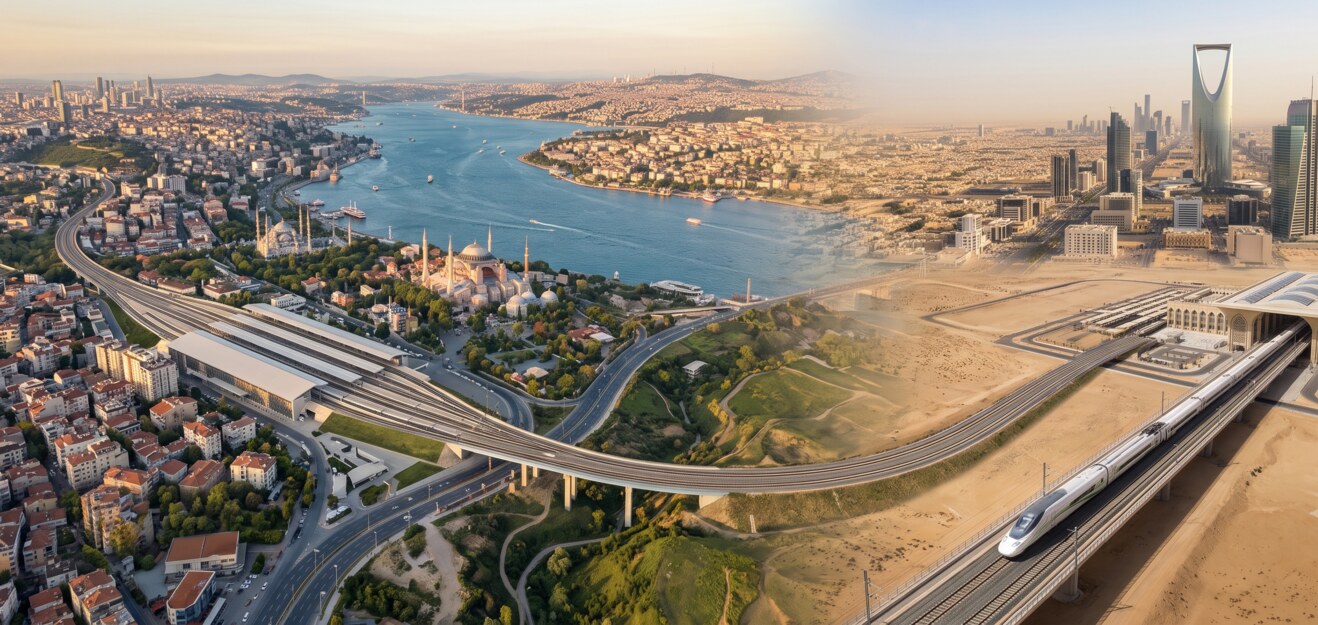
In the terms of developing the logistic sector in the Kingdom, different projects have been studied to achieve the ambitions of Vision 2030. Saudi Arabia Turkey Railway came as a suggested project that dates back the old ages, reviving its importance and operating the Kingdom’s spot in the Middle East.
About Saudi Arabia Turkey Railway
Saudi Arabia is working on a major railway link that will connect the Kingdom to Turkey, passing directly through Jordan and Syria. According to Saleh Al Jasser, Saudi Arabia’s Minister of Transport and Logistic Services, the joint studies for this project are expected to be completed before the end of 2026.
The route will build upon Saudi Arabia’s existing national railway, which already reaches the Jordanian border via Al Haditha crossing.
Additionally, this modern initiative actually revives a historic rail route from 1908. That original railway connected Turkey to Saudi Arabia (running from Damascus down to Medina) and included branch lines to Aleppo and Lebanon.

In other words, it was a major regional hub before being severely damaged during World War I, which fixing these damages will open new logistic horizons that will refresh the region and facilitate transportation.
Also read about: Saudi Agreement for Turkish Energy Projects
Status & Timeline of Saudi Arabia Turkey Railway
In reality, the project is passing through different stages and spots are linking countries together. As a result, each country is developing and working on the infrastructure to implement it. Here are the progress of the project according to each country:

Saudi Arabia Infrastructure
The southern half of the connection is largely ready. Saudi Arabia’s national rail network already extends to Jordanian border at Al Haditha crossing. Also, the Kingdom is currently integrating this rail line with its massive Red Sea ports to act as a regional logistics hub.
Turkey and Syria’s Connection
Turkey is actively rehabilitating its rail lines along the Syrian border. The first phase of the international connection targets linking Turkey’s grid directly to Aleppo in Syria, with an initial budget of approximately $110 million.
Transit agreements have already been signed allowing sealed Turkish freight trains and trucks to pass straight through Syria without being unloaded.
Jordan Railway
The biggest hurdle is Jordan according to the corridor working, because the Hashemite Kingdom must build new rail lines across its desert territory to connect the Syrian border in the north to the Saudi border in the South.
Proposed Path of Saudi Arabia Turkey Railway
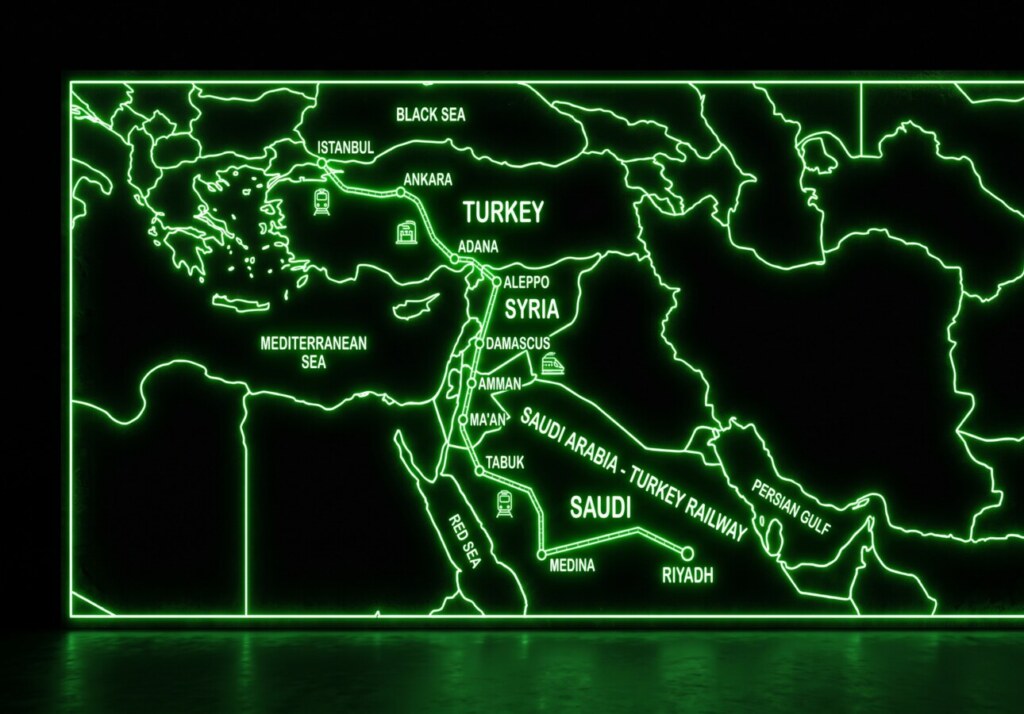
The proposed path of the modern Saudi Arabia Turkey Railway reflects the historic Ottoman era route, but rather just ferrying passengers to Medina. Here is the geographical path of the new corridor that is expected to take, broken down from north to south:
Turkey ( The Northern Hub)
The route begins by integrating with Turkey’s expansive national rail network, which serves as the bridge to Europe and Central Asia.
The freight specifically starts from Istanbul and major Turkish industrial centers down toward the southern border. This means that the primary crossing point into the Arab world is situated at the Turkish-Syrian border near the Turkish city of Gaziantep or the border gates near Kilis.

Syria (The Transit Corridor)
Despite the ongoing complexities of the Syrian situation, the trilateral agreements prioritize upgrading the traditional north-south axis through Syria.
The railway enters northern Syria and travels south through major economic and historical hubs, such as Aleppo, Hama, Homs and Damascus. After ending in Damascus, the track heads straight south to the border town of Daraa, which serves as the gateway into Jordan.
Jordan ( The Crucial Link and Sea Access)
Jordan is the geographic linchpin of the projects. This is where the most significant new construction must take place to bridge the gaps in the modern network.
The train enters northern Jordan near Mafraq and travels south through the capital, Amman, then the route continues to Ma’an. After this, a vital modern addition to this corridor is linking the main line to Jordan’s Port of Aqaba.
Moreover, this allows freight coming from the Mediterranean or Europe to bypass the Suez Canal and be loaded directly onto ships in the Red Sea. Finally, the main line continues southeast from Ma’an toward the Saudi border at Al Mudawwara.
Saudi Arabia ( The Southern Destination and Gulf Link)
The southern anchor of the project relies on Saudi Arabia’s rapidly expanding domestic railway grid, allowing the train to enter the Kingdom at Al Haditha border crossing.
The train enters Saudi Arabia at Al Haditha border crossing, unlike the historic train–which continued straight down the western coast to Medinah–the modern logistics route integrates into the existing Saudi freight network.
From Al Haditha, cargo can be routed centrally to Riyadh, diverted west to the massive Red Sea ports like Jeddah Islamic Port or sent east to the ports on the Arabian Gulf.
Also read about: Saudi Qatari Logistics Corridors
Regional Impact of Saudi Arabia Turkey Railway
By creating a continuous land bridge from Europe through Turkey, Syria, and Jordan down to the Arabian Peninsula, the project generates four major regional impacts:
Drastic Reduction in Shipping Costs and Time
This impact by offering a direct overland rail alternative, the corridor slashes freight transit times and insurance premiums for cargo moving between Europe and the Gulf, providing a buffer against costly disruptions in maritime shipping lanes.
Billions in Infrastructure Investment and Jobs
The multi-billion-dollar project triggers massive capital inflows for rail construction, modernization, and logistics hub development—directly creating thousands of engineering, construction, and operational jobs across all four nations.
New Transit Revenue for Jordan and Syria
As critical geographic transit corridors, Jordan and Syria stand to generate substantial, long-term economic revenue through transit fees, customs duties, and localized trade along the rail network.
Finally, Saudi Arabia Turkey Railway embodies the Kingdom’s efforts in strengthening the international relationships, aiming to enhance the national economy in partnership with other different global projects that you can discover via Bayut Blog.




 as a preferred source on Google