
Have you noticed changes in residential property prices across Saudi Arabia and wondered what they mean for buyers and investors? As Saudi Arabia’s real estate market continues to evolve, understanding residential sector price correction is becoming increasingly important.
Keep reading to learn about Residential Sector Price Correction, its key indicators, and the factors driving these market changes.
What is Residential Sector Price Correction?
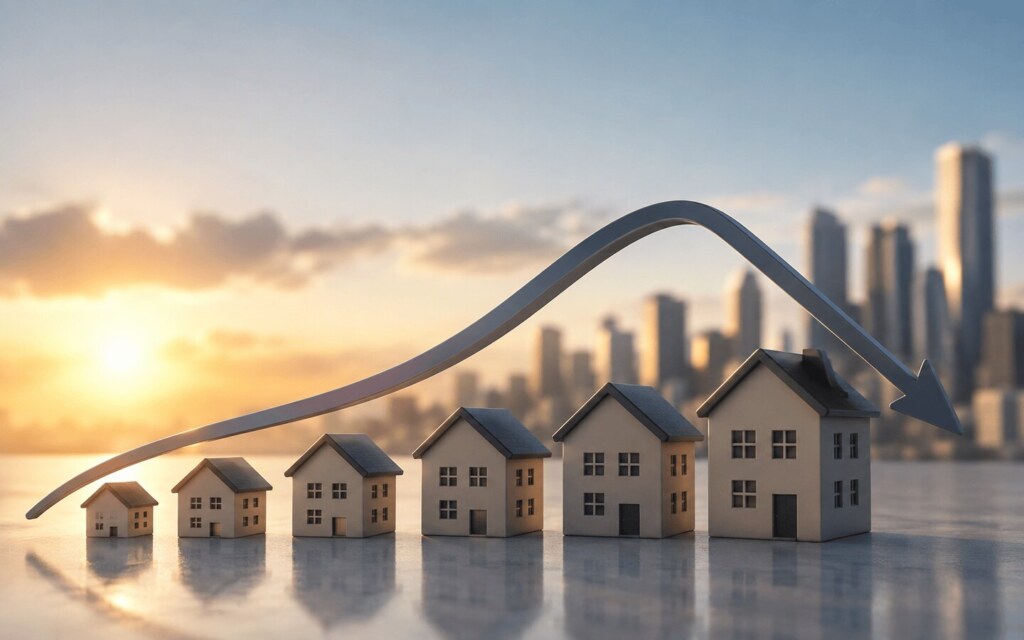
Residential Sector Price Correction refers to a market adjustment in which housing prices stabilize or decline following a period of rapid growth. Contrary to common misconceptions, a price correction does not necessarily indicate a market crisis. Instead, it often reflects a healthier balance between supply, demand, affordability, and economic fundamentals.
Price corrections are common in mature real estate markets and are generally viewed as part of a natural market cycle. They help prevent excessive price inflation, reduce speculative activity, and create a more sustainable environment for long-term growth.
In Saudi Arabia, residential price corrections can vary by city, district, and property type. While some areas may experience moderate declines in property values, others may maintain stable prices due to strong demand, population growth, and ongoing infrastructure development.
Why Does Price Correction Occur?
Property prices cannot continue rising indefinitely. When residential values increase faster than household incomes and purchasing power, affordability becomes a challenge for many buyers. As demand slows, prices may gradually adjust until a healthier market balance is achieved.
Is Price Correction a Positive or Negative Sign?
In many cases, a residential sector price correction is considered a positive sign. It can improve affordability, support sustainable homeownership, and reduce the risk of speculative market bubbles.
For buyers, corrections may create opportunities to purchase homes at more reasonable prices. For investors, they can provide access to properties with stronger long-term value and more realistic market valuations.
Understanding Residential Sector Price Correction at a Glance
Aspect | Description |
|---|---|
Aspect Definition | Description A market adjustment where residential property prices stabilize or decline after a period of rapid growth |
Aspect Purpose | Description To restore balance between housing supply, demand, and affordability |
Aspect Impact on Buyers | Description Creates opportunities to purchase homes at more competitive prices |
Aspect Impact on Investors | Description Encourages long-term investment strategies based on market fundamentals |
Aspect Market Effect | Description Supports sustainable growth and reduces the risk of property bubbles |
Key Indicators of Residential Sector Price Correction
Understanding the signs of a residential market correction can help buyers, investors, and industry professionals make informed decisions. Real estate analysts often monitor a range of indicators to evaluate market conditions and identify potential shifts in pricing trends.

Declining Residential Property Prices
One of the most visible indicators of a correction is a gradual decline in residential property prices. This often occurs when demand softens or when the market seeks to return to more sustainable valuation levels.
Reduced Transaction Activity
A decrease in property transactions can indicate growing caution among buyers. When consumers delay purchasing decisions due to affordability concerns or changing market expectations, transaction volumes typically decline.
Increased Housing Supply
The availability of a larger number of residential units can place downward pressure on prices. As developers continue delivering new housing projects, supply may begin to exceed immediate demand in certain areas.
Longer Selling Periods
Properties remaining on the market for extended periods often signal reduced buyer urgency. During correction phases, sellers may need to adjust pricing expectations or offer incentives to attract buyers.
Stabilizing Rental and Purchase Costs
When rental rates and property prices begin to stabilize after a period of rapid growth, it can indicate that the market is moving toward equilibrium.
Declining Investor Speculation
Another important indicator is a reduction in speculative purchases. As short-term investors become more cautious, market activity increasingly reflects genuine housing demand rather than expectations of rapid capital appreciation.
Key Indicators Overview
Indicator | What It Suggests |
|---|---|
Indicator Falling Property Prices | What It Suggests Improved affordability and reduced market pressure |
Indicator Lower Transaction Volumes | What It Suggests Buyers becoming more cautious |
Indicator Higher Housing Inventory | What It Suggests Supply growing faster than demand |
Indicator Longer Selling Periods | What It Suggests Reduced competition among buyers |
Indicator Stable Rental Growth | What It Suggests A more balanced housing market |
Indicator Reduced Speculative Activity | What It Suggests Greater focus on end-user demand |
Reasons Behind Residential Sector Price Correction
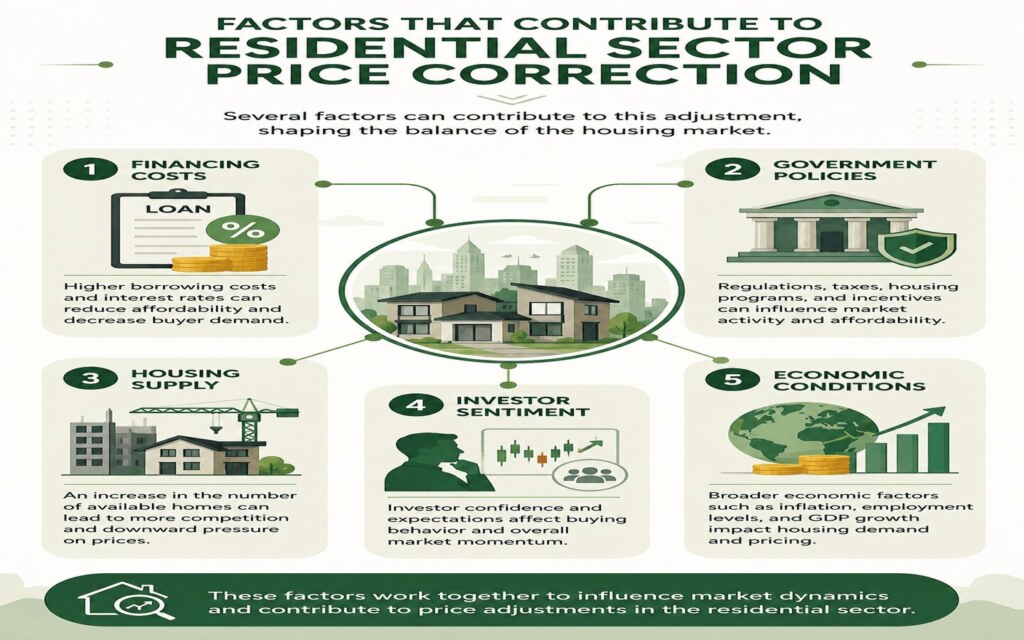
Residential property prices are influenced by numerous economic, financial, and demographic factors. Understanding these drivers can help explain why corrections occur and why their impact differs across regions and property segments.
Rising Interest Rates and Financing Costs
Mortgage financing plays a crucial role in housing demand. When interest rates rise, borrowing becomes more expensive, reducing affordability and potentially slowing residential property purchases. As financing costs increase, some buyers may delay their homeownership plans, contributing to slower price growth or market corrections.
Also Read: Gen Z in Housing Market

Affordability Challenges
In certain locations, housing prices may rise faster than income levels. When affordability declines, demand naturally weakens, encouraging the market to adjust toward more sustainable price points.
Expansion of Housing Supply
Saudi Arabia has experienced significant residential development in recent years. New communities, apartment projects, and large-scale housing initiatives have increased the availability of homes across the Kingdom.
Vision 2030 and Housing Market Transformation
Saudi Vision 2030 has played a major role in reshaping the housing sector. Through initiatives aimed at increasing homeownership rates and expanding housing options, the Kingdom continues to improve residential market accessibility.
Government Policies and Market Regulation
Government measures designed to improve transparency, regulate land usage, and support housing affordability can influence market behavior and contribute to healthier pricing structures.
Economic and Demographic Factors
Population growth, urbanization, employment opportunities, inflation, and infrastructure investments all influence housing demand. Changes in any of these factors can affect property values and contribute to price corrections.
Economic Uncertainty and Consumer Behavior
Periods of economic uncertainty can influence buyer confidence. When households become more cautious about major financial commitments, residential demand may temporarily decline, contributing to slower price growth.
Shift Toward Sustainable Market Growth
Many market observers view recent adjustments as evidence of a maturing Saudi real estate sector. Rather than relying solely on rapid price appreciation, the market is increasingly focused on affordability, long-term demand, and sustainable growth.
Main Drivers of Residential Price Correction
Factor | Influence on Property Prices |
|---|---|
Factor Interest Rates | Influence on Property Prices Higher rates can reduce mortgage demand |
Factor Housing Supply | Influence on Property Prices Increased supply can moderate prices |
Factor Affordability Levels | Influence on Property Prices Lower affordability may weaken demand |
Factor Government Policies | Influence on Property Prices Promote market balance and transparency |
Factor Economic Growth | Influence on Property Prices Supports long-term housing demand |
Factor Population Growth | Influence on Property Prices Creates sustained demand for residential units |
What Does Residential Sector Price Correction Mean for Buyers and Investors?

For homebuyers, a residential sector price correction can present an opportunity to enter the market at more favorable prices. Buyers may benefit from greater property selection, improved affordability, and stronger negotiating power.
For investors, corrections can provide attractive entry points into the market. Rather than focusing on short-term gains, investors can evaluate opportunities based on rental yields, infrastructure developments, community growth, and long-term capital appreciation potential. Ultimately, a balanced market benefits all stakeholders by encouraging sustainable growth and reducing volatility.
Frequently Asked Questions
Here are some of the most frequently asked questions about Residential Sector Price Correction in Saudi Arabia:
It refers to a market adjustment in which residential property prices stabilize or decline after a period of rapid growth, helping restore balance between supply, demand, and affordability.
No. In many cases, a price correction is a normal and healthy market adjustment that supports long-term stability and sustainable growth.
Homebuyers may benefit from improved affordability, increased property choices, and stronger negotiating power during a correction period.
Key factors include interest rates, housing supply, affordability levels, economic conditions, government regulations, and demographic trends.
Yes. Property markets often recover as economic conditions improve, demand strengthens, and market equilibrium is restored.
Many investors view market corrections as opportunities to acquire properties at more attractive valuations. However, investment decisions should always be based on financial goals, location analysis, and market research.
Here we come to the end of our article, where we discussed Residential Sector Price Correction in Saudi Arabia, its meaning, key indicators, and the primary factors behind market adjustments. We also explored how these corrections can influence buyers, investors, and the overall housing sector while contributing to a healthier and more sustainable real estate market.
We invite you to visit Bayut Blog for more expert insights, market updates, and comprehensive guides covering the latest trends in Saudi Arabia’s real estate sector.




 as a preferred source on Google