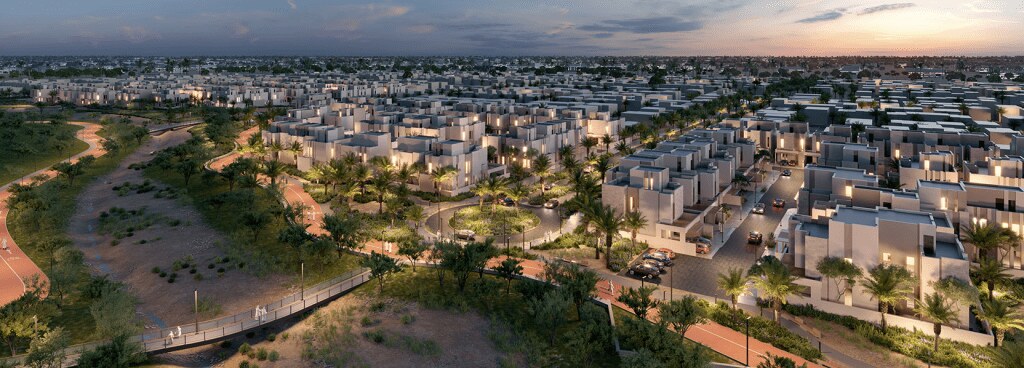
The rental market in Saudi Arabia is becoming one of the strongest real estate opportunities globally. It offers income, long-term growth, and strong government support.
The market is backed by:
- Sovereign wealth
- Population growth
- Corporate relocation
- Giga-project employment
- Zero income tax on individual rental income
- Better transparency through Ejar
The rental market of Saudi Arabia is valued at SAR 155 billion and is projected to reach SAR 214 billion by 2030. Rental activity is expected to grow even faster, driven by Build-to-Rent expansion, multinational relocation, flexible leases, and more than 3 million registered Ejar contracts.
For investors, the appeal is clear: high yields, rising property values, no income tax, and a government actively opening the market to global capital.
Returns That Stand Out
Saudi Arabia offers rental yields that are stronger than many mature global markets.
Key figures include:
- Riyadh: 8.89% gross yield
- Jeddah average: 7.89% gross yield
- KSA national average: 6.84% gross yield
- Al Salamah, Jeddah: 11.7% peak gross yield

Across the Kingdom, realistic gross yields usually range from 6% to 8.5%. Net yields after costs often sit around 4.8% to 5.5%.

The biggest advantage is the tax. Saudi Arabia charges 0% income tax on individual rental earnings. This means investors keep more of their rental income compared with markets where tax can reduce returns sharply.
Why Saudi Arabia Looks Attractive
Zero Income Tax
Rental income is not taxed for individual investors. This makes net returns more competitive than many international markets.
Sovereign-Backed Demand
Saudi Arabia has around USD 1.3 trillion in giga-project investment. Projects such as NEOM, Qiddiya, Diriyah, Red Sea Global and New Murabba create jobs. Jobs create tenants.
Ejar Transparency
More than 3 million leases were registered through Ejar in 2024. This gives investors clearer data on rental values, lease activity and market demand.
Three Cities, Three Opportunities
CAPITAL · VISION 2030 HUB
Riyadh
The most powerful corporate rental market in the Middle East — anchored by 600+ multinational headquarters
STC Index
2025
COASTAL · FREE MARKET YIELD
Jeddah
Saudi Arabia’s freest rental market — no rent controls, growing 3–6% annually, highest peak yields in the Kingdom

Salamah
Omnia Capital
2025
EASTERN PROVINCE · FASTEST GROWTH
Dammam &
Khobar
The Kingdom’s fastest-growing market in 2025 — affordable entry, industrial demand, and zero rent controls
growth YoY
Cavendish
Maxwell 2025
Six Reasons to Invest Now
40M
Population Reaching 40 Million by 2030
Saudi Arabia’s population grows from 35.3 million today toward 40 million by 2030 — every additional resident is a potential tenant, and 44.4% of the current population are already expatriates whose rental demand is employment-driven and highly sticky.
600+
Multinationals Now Headquartered in Riyadh
The Regional HQ Programme exceeded its 2030 target years ahead of schedule, with over 600 international companies placing their regional offices in the capital. Each company brings cohorts of senior professionals requiring premium long-term accommodation.
2026
Foreign Ownership Fully Open Since January
The Law of Real Estate Ownership by Non-Saudis, effective January 22, 2026, allows any foreign individual or entity to purchase residential or commercial property in designated zones across Riyadh, Jeddah, and all major cities — with full rental income repatriation rights.
3×
Rental Rates Projected to Triple Near Expo 2030
Properties in Riyadh’s Expo 2030 catchment zones are positioned for a triple-rate rental event in September 2030 – the same month the five-year freeze lifts. Investors who buy today lock in today’s yields and face a material repricing event aligned with one of the world’s largest gatherings.
0%
Zero Tax on Rental Income – Permanently
Saudi Arabia charges no income tax on individual rental earnings. That zero-tax environment is not a temporary incentive – it is a structural feature of the Kingdom’s fiscal model, and it transforms already-strong gross yields into net returns that substantially exceed equivalent investments in regulated, taxed markets.
USD
1.3T
Giga-Project Spending Creates Demand Floors
NEOM, Red Sea Global, Qiddiya, Diriyah, and New Murabba represent USD 1.3 trillion in sovereign-backed construction contracts. Each project generates employment – and employment generates tenants. The demand floor for Saudi Arabia’s rental market is written into government budgets, not market sentiment.
What Makes the Market Different?
The rental market in Saudi Arabia is not relying only on market sentiment. The government is actively shaping the housing sector through:
- Mega-project investment
- REDF and Sakani support
- Market transparency
- Foreign ownership reform
- White Land Tax
- Improved lease registration through Ejar
The White Land Tax encourages landowners to develop idle plots, helping improve supply quality. At the same time, Ejar gives investors better rental data, reducing uncertainty.
Affordability is also improving. Saudi Arabia’s price-to-income ratio has moved from 9.9 times annual income in 2015 to around 7 times in 2026, with a government target of about 5 times.
Demand Catalysts Through 2034

Start on Bayut-KSA
Bayut-KSA is a practical starting point for investors looking to enter Saudi Arabia’s rental market.
The platform offers:
- Verified listings
- Live price data
- RERA-certified agents
- Neighbourhood-level options
- Rental yield visibility
- Foreign ownership zone guidance
Investors can explore:
- Riyadh for Expo 2030 positioning
- Jeddah for high-yield free-market districts
- Dammam and Khobar for affordability and growth



 as a preferred source on Google