If you have been watching Saudi Arabia’s rise over the last few years, then you will know that the Kingdom is no longer just building for itself; it is building for the world. Now, for the first time, the world is officially being invited in. In January 2026, a historic milestone goes live: Saudi Arabia will open the door for foreigners to own real estate inside the Kingdom legally. This is the kind of reform that global investors have been waiting for. Let us break down the Foreign Ownership Law (2026) in KSA to show you what is really happening on the ground, what is changing, and why this moment is unlike any other for foreign investment in real estate.
New Legal Foundation for Foreign Ownership
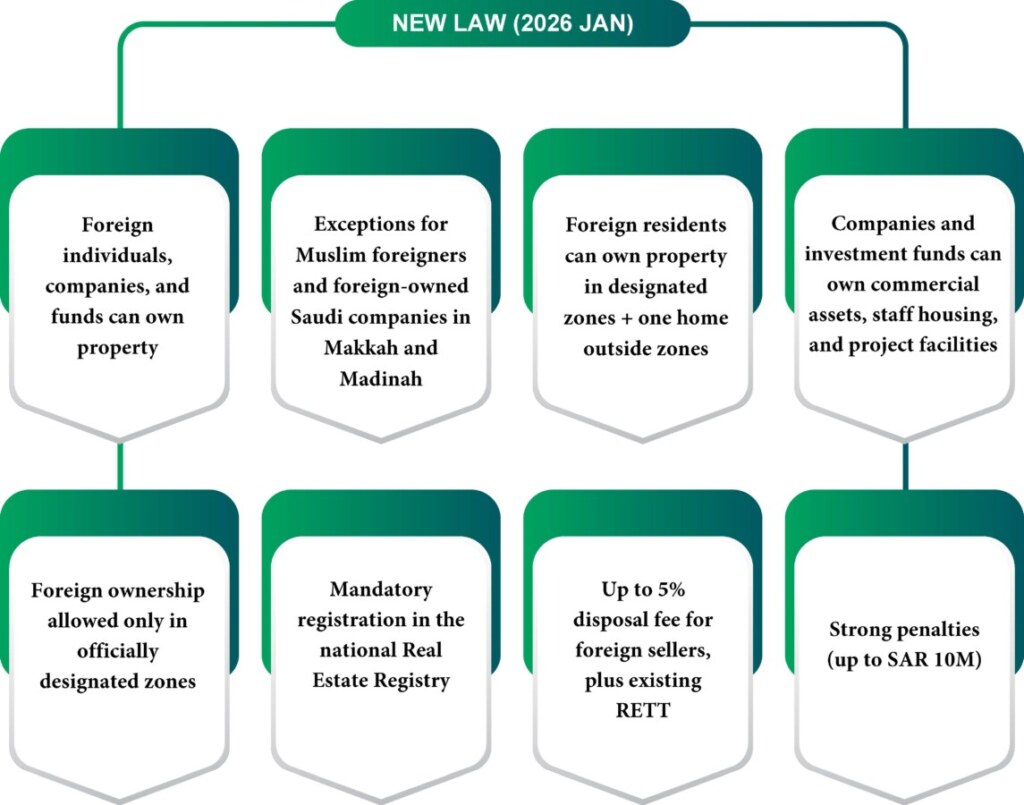
The new law significantly expands the definition of who may qualify as a “non-Saudi” property acquirer. Eligible parties now include:
- Foreign individuals (whether resident or non-resident)
- Foreign companies and corporate entities
- Foreign-owned Saudi companies
- Nonprofit foreign organizations
- Diplomatic missions and international organizations (subject to approval)
These groups may own full real estate rights, including ownership, usufruct, long-term leases, and other legally recognized in rem rights.
More Inclusive than the Old Law
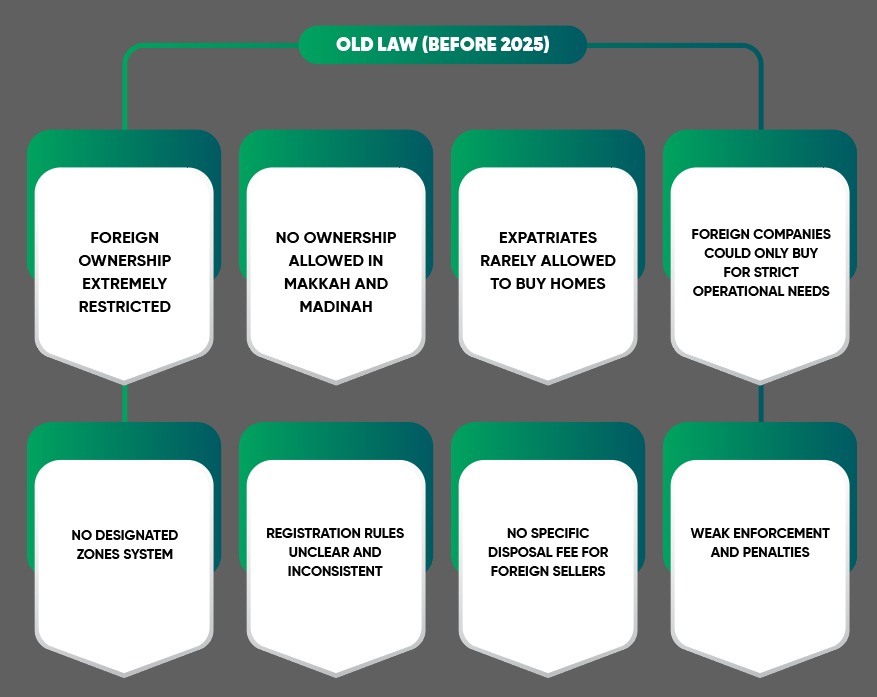
This broad eligibility contrasts sharply with the previous law, which offered narrow pathways and purpose-based permissions for foreign ownership.

Designated Zones Open to Foreign Property Investment
Foreign ownership will not apply uniformly across the Kingdom. Instead, Saudi Arabia will adopt a Designated Zone model, where only specific geographic areas defined through upcoming Implementing Regulations will be legally open to foreign buyers.
The upcoming regulations are expected to identify:
- Zones within major urban centers
- Master-planned developments
- Mixed-use districts
- Commercial and industrial corridors
- Strategic economic zones
Cities like Riyadh and Jeddah are expected to contain extensive designated zones due to their population growth, infrastructure expansion, and role in national development.
Buyers can use established property portals such as Bayut-KSA to monitor listings and stay informed as designated zones are gradually announced. Also read about what startups to invest in Saudi Arabia’s growing economy with Bayut-KSA.

Muslim Foreign Ownership in Makkah and Madinah
With over 13 million Muslims visiting annually, many seeking longer-term spiritual ties, this change introduces a new and respectful pathway to homeownership that did not meaningfully exist before.
It offers Muslim investors a chance to establish roots near the Haramain while ensuring all ownership remains fully aligned with religious and regulatory safeguards.
Why is KSA Becoming a Global Investment Hub?
Saudi Arabia is transitioning from an oil-dependent economy to a global investment powerhouse, and opening its real estate market is one of the fastest and most impactful ways to:
- Attract international investors
- Accelerate urban mega-projects
- Diversify national income
- Strengthen tourism and hospitality
- Modernise regulation and transparency
- Grow urban centres
- Increase housing supply
- Build long-term economic prosperity
This is a nationwide economic transformation strategy, designed to reshape Saudi Arabia’s future.
What Foreign Investors Gain in KSA
Market data shows Saudi Arabia’s real estate prices continue to rise, with the national price index increasing by more than 4% between late 2024 and early 2025. Riyadh is projected to reach an index level of 107.3 in 2025, reinforcing its position as a high-demand investment market.
Saudi Arabia’s new foreign ownership law opens a once-restricted market, giving global investors access to an Investment Hub in the form of Real Estate.
- Access to a fast-growing real estate market in Riyadh, Jeddah, and other expanding cities.
- Ability to invest in major Vision 2030 mega-projects, including New Murabba, the Mukaab, Jeddah Central, and the Red Sea developments.
- Strong rental yield potential supported by population growth and rising expatriate demand.
- Clear ownership rights, mandatory registration, and stronger legal protections.
- Early-entry advantage in newly opened designated zones before foreign demand increases.
As the foreign ownership law takes effect in 2026, Bayut-KSA will play an important role in helping buyers understand the market and stay aligned with the investment hub Saudi Arabia is rapidly becoming.