
In late 2025, Riyadh hosted a major investment summit that drew global capital managers for the first time since several policy shifts were implemented. Attendees spoke about early wins in tech and logistics. Still, many also shared a recurring theme: regulatory sequencing and rapid labor policy changes are now part of project planning, not afterthoughts. These real-time developments reflect the challenges of foreign investors in Saudi Arabia not as abstract risks, but as operational realities that surface during execution.
What are the Challenges of Foreign Investors in Saudi Arabia?
The first obstacles usually appear after the investment license is approved, not before.
Foreign investors commonly face:
- Layered regulatory approvals involving the Ministry of Investment (MISA) and sector regulators
- Policy updates introduced under Vision 2030 with limited transition periods
- Saudization requirements linked to profession, company size, and wage thresholds
- Strict VAT and tax compliance standards enforced by ZATCA
- Legal and dispute-resolution frameworks unfamiliar to common-law jurisdictions
These issues affect how quickly and efficiently a business can operate, rather than whether it can enter the market.
Licensing Challenges
At first glance, Saudi Arabia’s centralized licensing through the Ministry of Investment (MISA) suggests simplicity. In practice, investors quickly learn that authority is shared.
Foreign investors often navigate:
- Initial licensing via MISA
Additional approvals from sector regulators, particularly in:

- Healthcare
- Education
- Finance
- Logistics
- Media
Processes involving:
- Non-parallel approvals
- Detailed compliance reviews
Also, read about invest saudi portal to get licensed for investing in KSA.
Policy Volatility Under Vision 2030
Saudi Arabia’s rapid reform agenda is central to its appeal, but speed creates planning risk.
Investors must plan for:
- Frequent labor and compliance updates
- Short transition windows for new policies
- Sector- and profession-specific rules
A recent example:
- 60% Saudization in marketing and sales roles
- Applies to establishments with 3+ employees
- Includes minimum wage thresholds
Saudization (Nitaqat) as a Strategic Constraint
Saudization is often framed as a hiring issue. In reality, it shapes operational flexibility.
Under the Nitaqat system:

- Companies are classified from Platinum to Red based on:
- Sector
- Size
- Saudi workforce percentage
- Lower classifications can result in:
- Visa restrictions
- Reduced access to government services
- Slower scaling
Saudization under the Nitaqat system is a strategic operating constraint for foreign investors in Saudi Arabia. Localization targets can apply by profession, not just headcount, and non-compliance can restrict visas and government services, directly affecting growth timelines and cost structures.
Taxation and Compliance Pressure
Many investors arrive expecting flexibility and incentives. Instead, they encounter a system increasingly focused on enforcement.
Key realities include:
- 15% VAT with strict invoicing rules
- High documentation standards set by ZATCA
- Growing audit-readiness expectations
Common challenges:
- Underestimating compliance setup time
- Exposure from early VAT or payroll errors
- Complexity in intercompany transactions
Legal Resolution Challenges
Saudi Arabia has modernized its corporate framework, but legal unfamiliarity remains.
Foreign investors should note:
- The New Companies Law took effect in January 2023
- Court proceedings are primarily in Arabic
- Judicial decisions are not precedent-based
- International arbitration requires explicit state consent
The RHQ Requirement
For investors targeting public-sector or government-linked revenue, structure matters early.
Since January 2024:
- Multinational firms are expected to establish a Regional Headquarters (RHQ) in Saudi Arabia
- Without RHQ status:
- Access to government contracts may be restricted
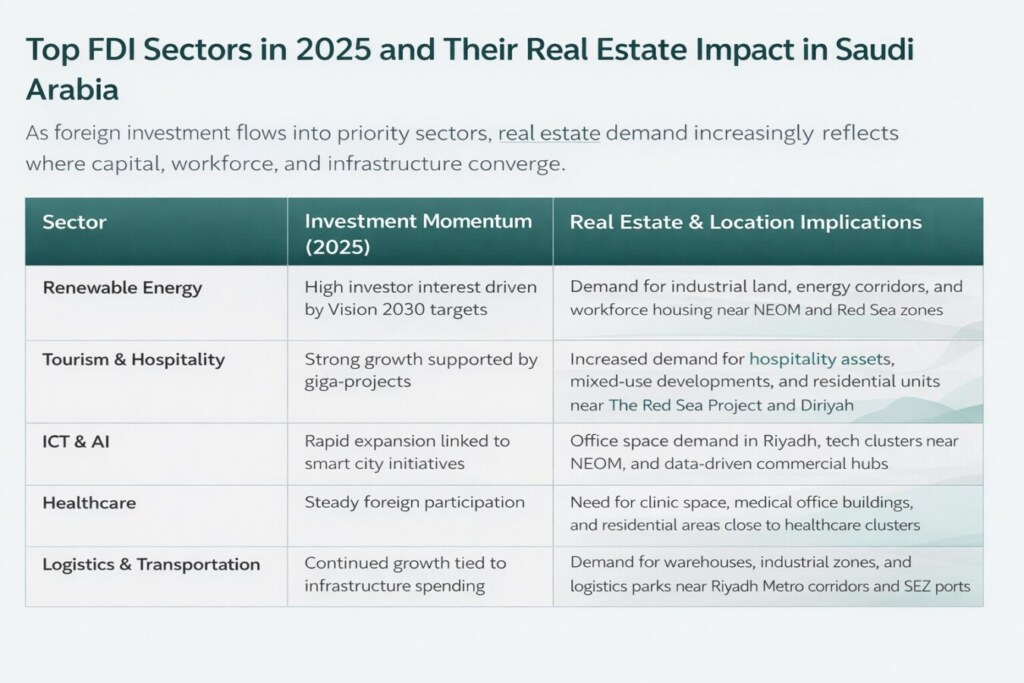
Real Estate Considerations for Foreign Investors
Real estate decisions often surface early, once licensing and hiring plans begin to take shape.
Foreign investors should factor in:
- Recent reforms allowing foreign ownership of property under defined conditions, expanding options beyond leasing
- Location choices tied to business districts, economic zones, and RHQ requirements
- Variations in commercial lease terms, registration processes, and documentation standards
- The role of real estate in supporting operations, including:
- Office space
- Staff housing
- Proximity to government or project hubs
While not always viewed as a primary risk, real estate choices directly affect costs, compliance, and scalability in the Saudi market.
Mitigation of the Risks
Experienced investors design for complexity rather than assuming simplicity.
Effective mitigation includes:
- Mapping all regulators, not only MISA
- Building buffers for policy and Saudization changes
- Treating localization as part of unit economics
- Implementing VAT and payroll systems at audit-ready standards
- Making RHQ decisions early if government revenue is strategic
- Drafting contracts with clear dispute escalation mechanisms
Enter Market with Bayut-KSA
Real estate choices often shape early operating costs for foreign investors. Bayut-KSA provides visibility into Saudi commercial and residential property markets, helping investors compare locations and understand pricing trends as part of market entry planning.




 as a preferred source on Google