Capital decisions in Saudi Arabia have become more intentional. Buyers and investors are taking more time, not because opportunities are limited, but because the market offers more choice than before. The search for the best investment in Saudi Arabia now reflects a desire for clarity, stability, and long-term value.
Vision 2030 continues to shape housing demand, urban growth, and access to financing across the Kingdom. Real estate decisions today are guided by structure and planning, not impulse. For investors who understand this shift, the current environment offers clear paths to sustainable returns.
What Is the Best Investment in Saudi Arabia in 2026?
Most successful investors avoid relying on a single asset. Instead, they build stability first and then introduce growth where conditions support it.
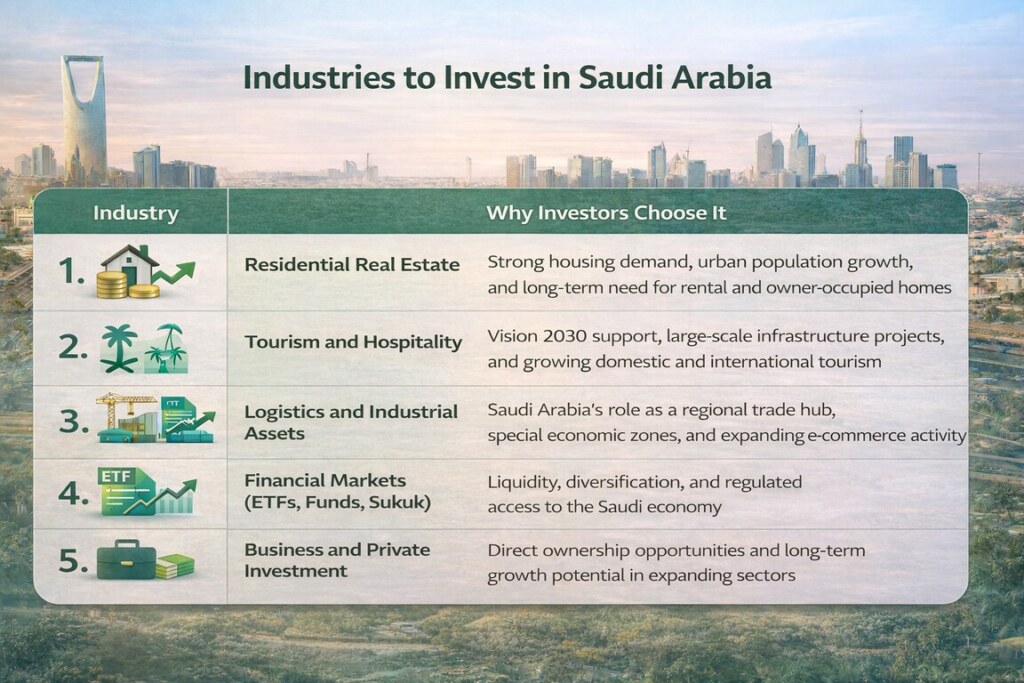
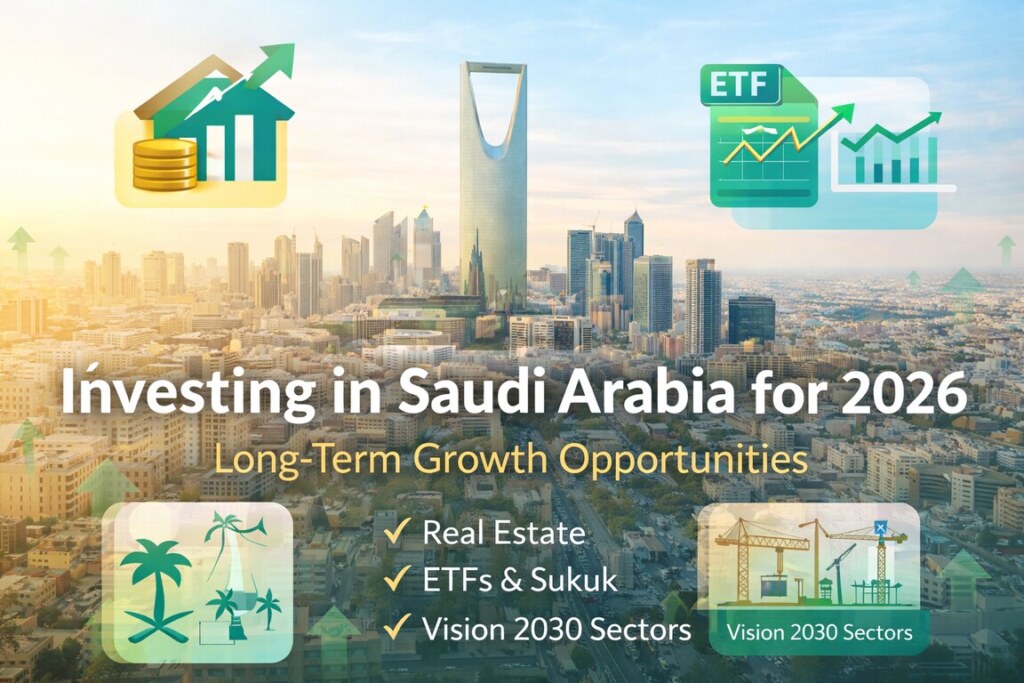
In practice, the best investment approach in Saudi Arabia in 2026 often includes:
- Residential real estate in cities with consistent demand
- Regulated financial products such as ETFs or Sukuk
- Targeted exposure to Vision 2030-supported sectors
Saudi Arabia’s A+ sovereign credit rating and low public debt levels support an environment where long-term investment planning is both feasible and disciplined.
How Saudi Arabia Shapes Investment Decisions
Saudi Arabia follows a deliberate economic path. Long-term planning guides how housing, finance, and private investment develop. Consequently, capital moves within clearer boundaries than before.

Vision 2030 influences:
- Where new residential communities emerge
- How housing finance operates
- Which sectors receive sustained support
Meanwhile, institutions such as the Ministry of Investment, the Capital Market Authority, and the Saudi Central Bank actively regulate access and compliance. This structure gives investors confidence and reduces uncertainty.
Real Estate as a Starting Point
For many investors, property represents the first serious commitment of capital. This preference exists for a simple reason. Housing demand remains visible and measurable.
In addition, residential real estate benefits from:
- Continued population growth in urban centers
- Government-backed housing initiatives
- Regulated mortgage and financing systems
Market estimates place the Saudi residential real estate sector at approximately USD 164.85 billion in 2026, supported by sustained urban demand and housing program activity.
Cities Where Property Demand Remains Strong
Property performance varies by location. Therefore, experienced investors focus on areas where employment, infrastructure, and services expand together.
- Recent housing programs supported more than 96,000 families, with activity concentrated in major urban centers such as Riyadh and Jeddah.
Over time, many investors observe that mid-range residential units:

- Maintain higher occupancy
- Appeal to a broader tenant base
- Carry lower vacancy risk
Luxury units can still perform well. However, they tend to react more sharply to market cycles.
The Saudi Stock Market
Rather than replacing property, equities often complement it. As a result, investors use the Saudi stock market to improve liquidity and diversification.
Tadawul provides access to:
- Exchange-traded funds
- Mutual funds
- Established listed companies
Because the Capital Market Authority regulates all activity, investors gain structured exposure without the need for constant monitoring. See guidelines on SAMA.
Shariah-Compliant Options
Shariah-compliant investments play a central role in Saudi Arabia’s financial system. Therefore, investors view them as core options rather than alternatives.
Common instruments include:
- Sukuk
- Shariah-screened equity funds
- Islamic REITs
These products emphasise asset-backed lending and disciplined risk management. As a result, investors who prioritize predictability often include them in balanced portfolios.
Business Investment for Experienced Investors
Business ownership appeals to investors seeking control. Accordingly, Saudi Arabia has simplified entry through digital licensing and expanded ownership rules.
However, this path requires:
- Active involvement
- Local operational understanding
- Compliance with labor and regulatory standards
- Patience before returns emerge
Saudi Arabia’s fiscal position remains strong, with public debt below 30% of GDP and stable sovereign credit ratings, helping reduce systemic risk for long-term investors.
Also, read about Automated Investment to save more time!
Make the Right Decision with Bayut-KSA
This evaluation becomes more practical when investors can compare prices, rental yields, and demand patterns across cities. Bayut-KSA support this process by providing transparent property data, location insights, and market visibility across Saudi Arabia.