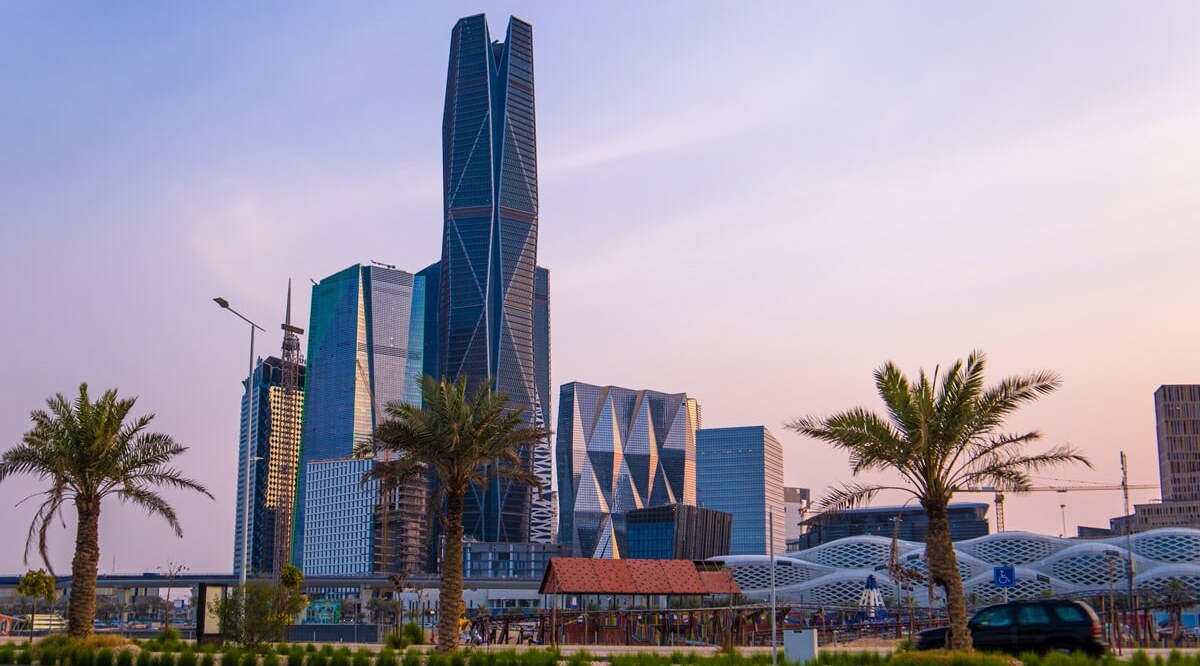
The advantages of investing in Saudi Arabia are becoming clearer as the Kingdom moves deeper into its Vision 2030 transformation. The investment story is no longer limited to oil. Growth is now being shaped by real estate, tourism, logistics, finance, healthcare, technology and manufacturing.
For investors deciding whether Saudi Arabia is worth entering, the answer depends on the sector, capital level and risk profile. Still, the Kingdom offers several long-term advantages, especially for those looking at property, business expansion and income-generating assets.
Vision 2030 Is Creating New Demand
Saudi Arabia’s investment appeal is closely linked to economic diversification. Vision 2030 positions the Kingdom as an investment powerhouse and a hub connecting Asia, Africa and Europe. Its diversification agenda is designed to expand private-sector participation, develop new industries and reduce reliance on oil.
This creates opportunities across:
- Real estate
- Tourism and hospitality
- Transport and logistics
- Manufacturing
- Financial services
- Technology
- Healthcare
- Renewable energy

For real estate investors, these shifts matter because new jobs, corporate activity and tourism flows can support long-term demand for housing, offices, retail spaces and hospitality assets.
A More Cost-Efficient Base For Investors
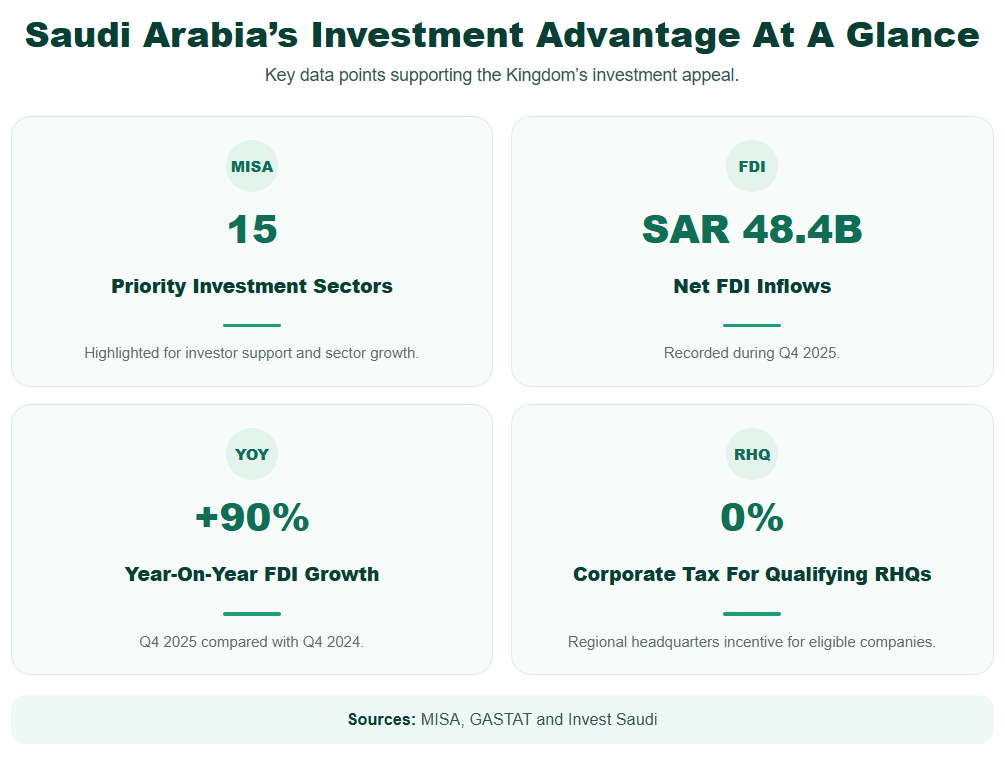
One major advantage is Saudi Arabia’s increasingly supportive tax and incentive environment. For qualifying regional headquarters and selected investment activities, the Kingdom has introduced measures that can reduce setup and operating pressures for investors. These may include tax advantages, customs-related support and employment-linked incentives, depending on eligibility and activity type.

These measures can support investors through:
- Lower tax exposure for qualifying activities
- Support for selected investment projects
- Customs-duty exemptions for eligible inputs
- Incentives linked to Saudi employment and training
- A more efficient base for regional expansion
For property-focused investors, tax treatment is also part of the wider investment calculation. Lower recurring ownership costs can make a difference when investors are comparing rental income, holding costs and long-term asset growth.
A Gateway Between Three Continents
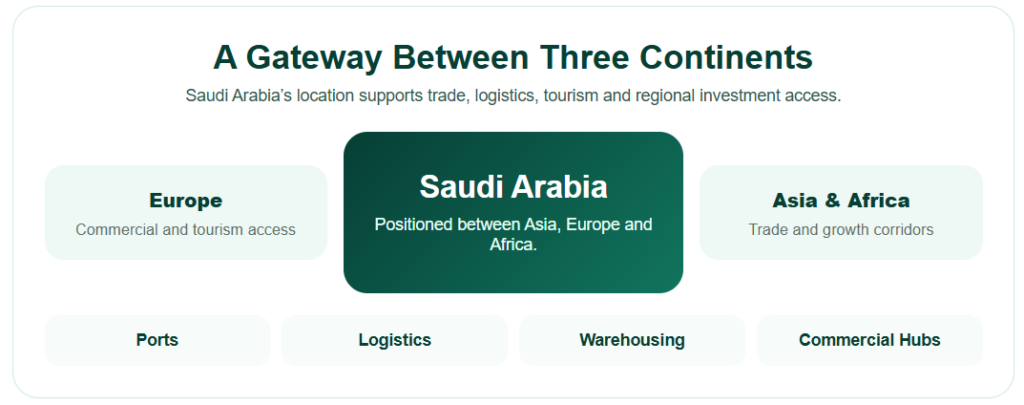
Saudi Arabia’s geography gives it a strong advantage for trade, logistics, tourism and regional business expansion. Its location between Asia, Africa and Europe supports the Kingdom’s ambition to become a global hub for movement, commerce and investment.
Infrastructure growth supports investment in:
- Logistics centres
- Warehouses
- Industrial real estate
- Ports and transport corridors
- Commercial districts
- Hospitality assets
- Residential communities near employment hubs
For property investors, infrastructure is not just a national growth story. It affects where people live, work and spend. Locations linked to employment, transport and new development corridors often become more attractive for long-term real estate investment.

Reforms Are Improving Investor Confidence
Saudi Arabia has also been strengthening its investment framework. MISA states that the updated Investment Law includes protections for investors and supports equal treatment between local and foreign investors under similar circumstances.
Important reform advantages include:
- Clearer treatment of local and foreign investors
- More structured investment procedures
- Defined incentives for qualifying projects
- Stronger legal protection for investment activity
- Greater focus on transparency and market access
These reforms matter because investors need more than growth potential. They also need clearer rules, better procedures and confidence that capital can be deployed within a stable legal framework. Bayut-KSA’s article on challenges of foreign investors in Saudi Arabia is a useful internal read for understanding the practical barriers investors still need to assess.
Real Estate Remains A Practical Entry Point
Real estate remains one of the most visible ways to participate in Saudi Arabia’s growth. Demand is supported by population growth, corporate relocation, infrastructure expansion, tourism and large-scale national projects.
Investors can consider:
- Residential apartments
- Villas
- Long-term rental properties
- Commercial offices
- Retail spaces
- Logistics and industrial assets
- REITs and indirect property exposure
As regulations become more structured, transparency is also improving across the property market. Bayut-KSA’s guide on Saudi Arabia property market transparency explains how clearer ownership rules, valuation standards and disclosure requirements are changing the way investors assess risk.
What Makes The Market More Investor-Friendly
Reforms and incentives are strengthening Saudi Arabia’s appeal for long-term investors.
For more active investors and developers, compliance also matters. Bayut-KSA’s guide to the real estate developer qualification certificate explains why formal recognition, regulatory clarity and developer credibility are becoming more important in the Saudi property market.
The Advantages Of Investing In Saudi Arabia With Due Diligence
The advantages of investing in Saudi Arabia are strongest when investors match national growth trends with sector-level and location-level evidence. Tax efficiency, infrastructure development, legal reform and real estate demand all support the long-term case, but every investment still needs proper due diligence.
Before committing capital, investors should review:
- Legal eligibility
- Ownership rules
- Tax treatment
- Location fundamentals
- Exit options
- Developer or operator track record
- Expected rental or business demand
For investors leaning towards property, Bayut-KSA offers a practical way to compare locations, explore listings and understand where real estate demand is developing across the Kingdom.





 as a preferred source on Google