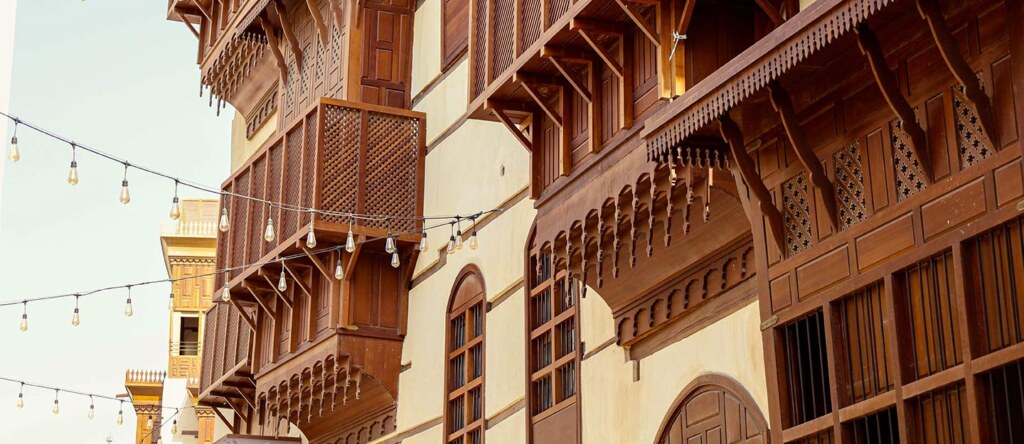
Al Rawashin in Saudi Arabia represents one of the most iconic architectural elements of the Hijazi region. Found primarily in Jeddah, Medina, and other western cities, these intricately carved wooden windows reflect a blend of Islamic art, craftsmanship, and cultural heritage. They are more than simple wooden structures; they signify centuries of tradition, social values, and environmental adaptation.
What is Rawashin?
Rawashin (singular : Rawshan) are traditional wooden window projections that extend from a building’s façade, crafted from durable woods and often decorated with intricate patterns. They provide privacy, ventilation, and shade, while adding charm to homes—especially in historic districts like Jeddah’s Al‑Balad.
Hejazi Al Rawashin
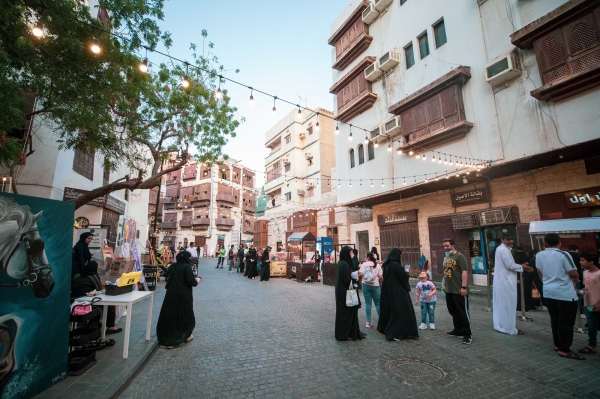
Hejazi Al Rawashin specifically refers to the Rawashin found in the Hejaz region—cities like Jeddah, Mecca, and Medina. These Rawashin are known for:
- Deeply carved latticework
- Large projecting frames
- Colored glass panels (often blue, green, or amber)
- Heavy use of Indian teak due to Red Sea trade routes
Hejazi craftsmen developed a unique artistic language that differentiated their Rawashin from other Islamic architectural forms.
You can check more of Saudi Arabia’s cultural heritage like Al Ula old town.
Wooden Rawashin
Wooden Rawashin are traditionally hand-carved using:
- Teak wood (most common due to durability)
- Mahogany
- Local Arabian woods
Their craftsmanship involves elaborate joinery techniques without using nails, making them both flexible and long-lasting. The detailed carving, latticework (mashrabiyya style screens), and polished wood surfaces create a visually rich façade.
Rawashin in Medina
In Medina, Rawashin carries a distinct spiritual and architectural importance. Historic homes around the Prophet’s Mosque area incorporated Rawashin to:

- Allow airflow in the hot desert climate
- Maintain household privacy in line with Islamic customs
- Showcase the city’s refined craftsmanship
Medina’s Rawashin often feature more conservative designs compared to Jeddah’s, with simpler patterns and smaller projections.
What Is the Origin of Hejazi Rawash?
The origin of Hejazi Rawash is tied to centuries of cultural exchange via the Red Sea trade routes. Influences include:
- Egyptian latticework traditions
- Yemeni wooden craftsmanship
- Indian and Southeast Asian wood-carving techniques
- Ottoman architectural elements
These influences merged into the distinct Hijazi style during the 18th and 19th centuries, forming the Rawashin we recognize today in historic Jeddah (Al Balad) and Medina.
Types of Al Rawashin in Saudi Arabia
There are several types of Al Rawashin in Saudi Arabia,varying by region and purpose:
- Fully Enclosed Rawshan
Completely covered with wooden lattice, offering maximum privacy while allowing airflow.
- Semi-enclosed Rawshan
Mix of solid wood and lattice screens, providing both openness and shade.
- Decorative Rawshan
Primarily ornamental, often smaller and used above doors or along façades.
- Glass-Paneled Rawshan
Includes colored or clear glass inserts, common in Jeddah’s historic homes.

Difference Between Al Rawashin and Mashrabiya
Although they are often confused, Al Rawashin and Mashrabiya are not identical.
| Feature | Al Rawashin | Mashrabiya |
| Structure | Full window projection | Latticework screen only |
| Size | Large, often room-sized | Smaller, typically part of a window |
| Function | Architectural + decorative | Privacy + ventilation |
| Region | Common in Hejaz region | Common in Egypt, Levant, Iraq |
In short, Mashrabiya is a type of wooden lattice screen, while Rawashin are entire projecting structures that may include Mashrabiya elements.
Uses of Al Rawashin in Saudi Arabia
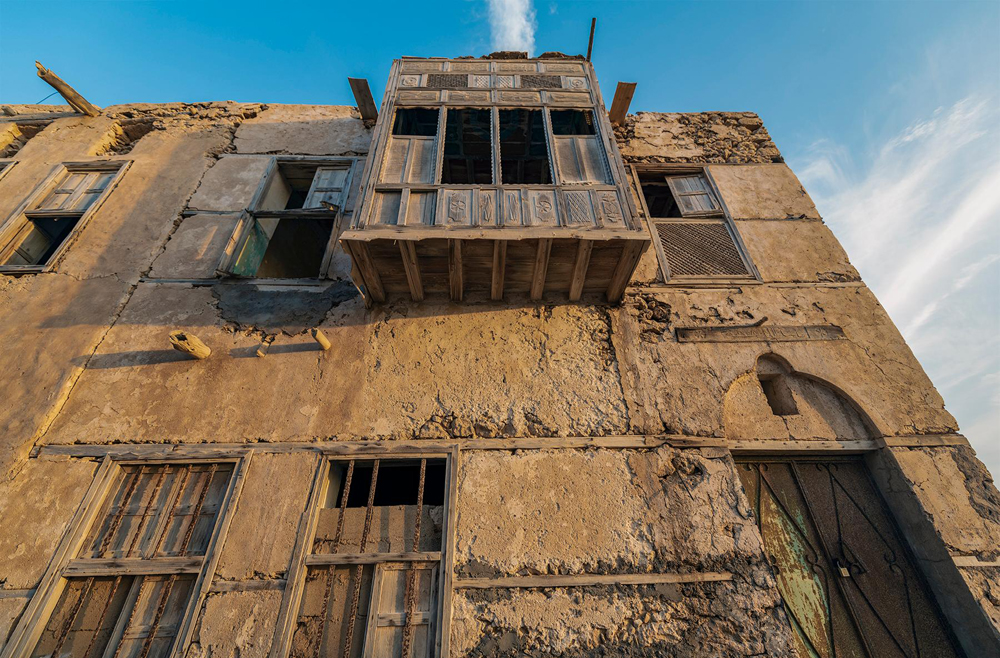
Rawashin historically served several purposes
- Climate Control
The wooden lattice allows cool breezes to circulate while blocking harsh sunlight.
- Privacy
Residents especially women could look outside without being seen, aligning with cultural values.
- Social Interaction
Rawashin provided a shaded extension where families could rest or observe street activities.
- Architectural Identity
They became a signature of Hijazi homes, showcasing wealth and craftsmanship.
- Cultural Preservation
Today, Rawashin are restored to preserve Saudi Arabia’s architectural heritage, especially in Jeddah’s Al-Balad district (a UNESCO site).
FAQ Al Rawashin in Saudi Arabia
most common questions about it
They are traditional wooden window frames that extend from homes, giving shade, airflow, and privacy.
They have beautiful carvings, colored glass, and designs inspired by old Red Sea trade cultures.
Not exactly Rawashin are full window projections, while Mashrabiya is just the wooden lattice screen.
Mainly in Jeddah’s Al-Balad and old neighborhoods in Medina and Mecca.
Al Rawashin in Saudi Arabia are more than just architecture—they symbolize Hijazi culture. Their Indian-influenced, climate-responsive design reflects centuries of history and artistry. Rawashin remains a cherished part of the Kingdom’s architectural heritage, central to ongoing cultural preservation.
Explore more about Jeddah’s historic Al‑Balad and its traditional architecture on the Bayut Blog.


 as a preferred source on Google