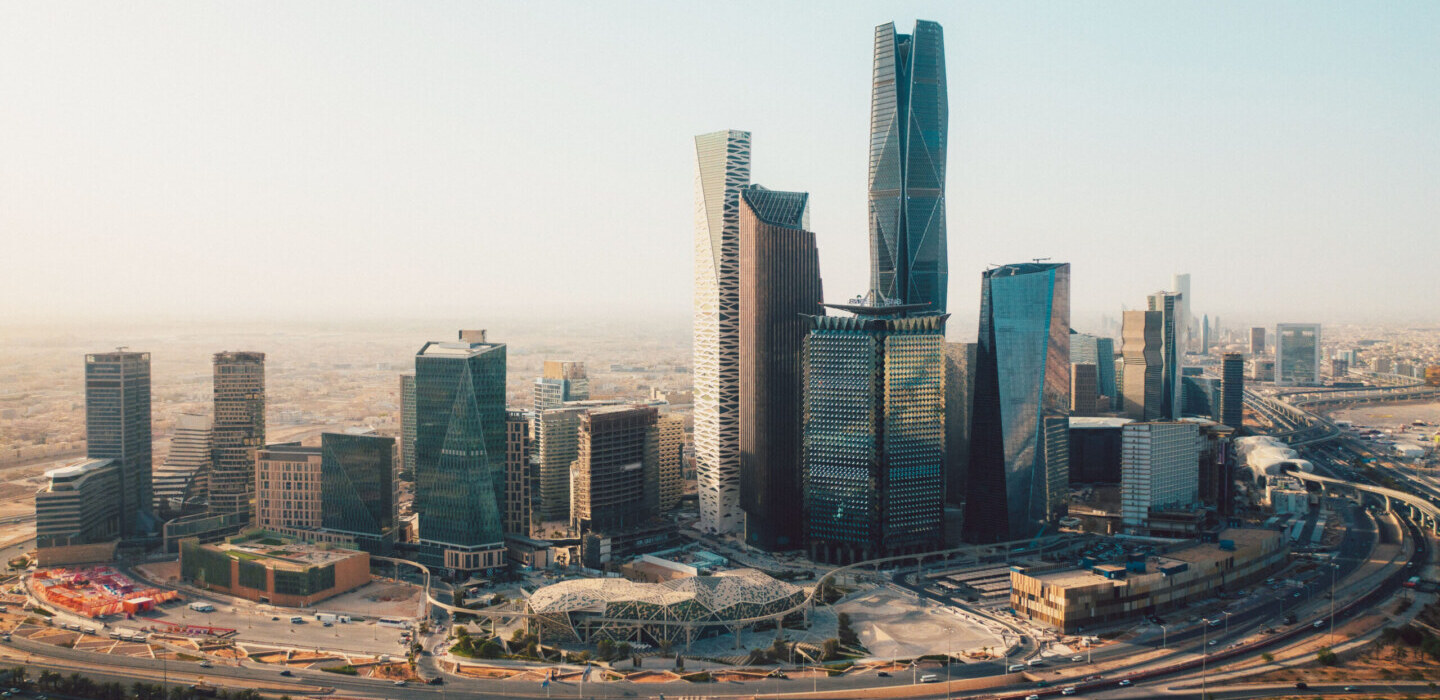
17 listed funds, SAR 30 billion in assets and 90% mandatory distribution floor. Here is every number, every risk, and every opportunity that matters to an investor right now. There is a question every wealth manager eventually faces when a client asks about Saudi real estate: Do they actually need to own a building to access this market? In this regard, Saudi REITs investment has emerged as a key entry point into Saudi Arabia’s real estate market.
The Verified Baseline
Saudi Arabia introduced its REIT framework in 2016. Ten years on, the market is no longer a niche instrument. It is an institutional-grade asset class with scale, regulatory depth, and a distribution mandate that is written into law.

The 90% distribution mandate is the foundational feature. It is not a target or a guideline. A REIT manager cannot retain earnings, defer distributions, or redirect income without investor consent. This makes Saudi REITs investment structurally different from traditional real estate ownership.
Why 2026 Is the Entry Window, Not the Exit
The investor who waits for a cleaner macro environment risks being priced out before the catalysts fully land.
- Market scale: Saudi Arabia’s real estate sector is valued at USD 72.84 billion in 2026, projected to reach USD 102.96 billion by 2031 at a 7.17% CAGR
- Logistics CAGR: Growing at 7.92%, powered by e-commerce expansion and the National Transport and Logistics Strategy, directly feeding warehouse-heavy REIT portfolios.
- Corporate and SME demand: Expanding at 8.02% CAGR through 2031, the fastest end-user segment, flowing into office and mixed-use REIT assets.
- RHQ relocations: Over 600 multinationals committed to Riyadh regional headquarters, driving near-zero Grade-A office vacancy across the capital.
- Foreign investor access: The CMA abolished the Qualified Foreign Investor restriction on February 1, 2026, opening Tadawul to all international investors for the first time.
- Live acquisition activity: In March 2026, MEFIC REIT signed agreements to acquire Jeddah and Makkah properties valued at SAR 815 million, signalling active fund-level conviction.

Key Advantages of Saudi REITs Investment
For investors who are new to the market, working with capital below the direct property entry threshold, REITs eliminate every barrier to entry simultaneously.

Full daily liquidity
Enter, resize, or exit on any Tadawul trading session. Direct property requires weeks of legal process and 5 to 7% in transaction costs just to get in. A REIT position has none of those constraints.
Low minimum ticket
A single unit provides full market access. Direct residential property in Riyadh starts at SAR 300,000 and upwards. The gap in accessibility is structural, not marginal.
CMA regulatory transparency
Regular disclosure of NAV, occupancy rates, portfolio composition, debt ratios, and distribution history is mandated. Saudi Arabia’s REIT framework mirrors international best practice.
Shariah-compliant structures
Most Saudi REITs are structured as Shariah-compliant instruments, making them appropriate for the global Muslim investor base newly active in the Kingdom following the January 2026 foreign ownership reform.
No management burden
No tenants to manage, no maintenance obligations, no void periods to absorb personally. The fund handles all operational responsibilities, freeing the investor to focus on allocation decisions.

These are the core reasons Saudi REITs investment appeals to investors.
What Saudi REITs Actually Own
Understanding what sits inside a REIT matters because sector investment drives both income stability and macro risk exposure. The 17-fund universe covers every major real estate segment in the Kingdom:
- Retail and commercial: Shopping centres, strip malls, and mixed-use retail anchored by long-lease tenants.
- Grade-A office: Riyadh and Jeddah submarkets, where RHQ demand has pushed vacancy to near-zero and is projected to drive a 70-80% increase in new supply by 2027.
- Hospitality: Hotels and serviced residences directly linked to the Ministry of Tourism’s 150 million annual visit target by 2030.
- Healthcare real estate: Hospitals and medical facilities with stable, long-duration lease structures and government-backed tenant profiles.
- Logistics and industrial: Warehousing and distribution centres growing at a 7.34% CAGR.
- Residential: Rental apartments and affordable housing portfolios, with rental activity growing at 7.85% CAGR to 2031.

Three Vehicles, One Framework
The real issue in Saudi real estate investment is not choosing one vehicle. It is knowing which combination fits which mandate.
Tadawul REITs
- Client needs liquidity within days, not months
- Ticket below direct property threshold
- Income-primary mandate, multi-sector exposure
- Market familiarisation before direct ownership
- Shariah-compliant structure required
Direct Property
- Capital appreciation target over 5+ years
- Client absorbs 5 to 7% transaction costs
- Gross yield of 8 to 9% at a specific location
- Estate or family office titled ownership required
- Makkah exposure — no listed REIT covers this
Tokenized Fractional
- Ticket size SAR 500 to SAR 50,000
- Specific property, not a pooled fund
- 24/7 income distribution
- REGA sandbox: 9 firms operational
- Emerging framework, strong trajectory
Tadawul REITs
- Client needs liquidity within days, not months
- Ticket below direct property threshold
- Income-primary mandate, multi-sector exposure
- Market familiarisation before direct ownership
- Shariah-compliant structure required
Direct Property
- Capital appreciation target over 5+ years
- Client absorbs 5 to 7% transaction costs
- Gross yield of 8 to 9% at a specific location
- Estate or family office titled ownership required
- Makkah exposure — no listed REIT covers this
Tokenized Fractional
- Ticket size SAR 500 to SAR 50,000
- Specific property, not a pooled fund
- 24/7 income distribution
- REGA sandbox: 9 firms operational
- Emerging framework, strong trajectory
The Yield Comparison
Saudi Arabia combines the income characteristics of a high-growth market with the tax structure of a sovereign wealth state.
Saudi Arabia’s zero income tax on rental earnings and zero capital gains tax fundamentally widens the net yield gap over London, Singapore, and New York. The Riyadh direct property yield of 8.89% retains almost its full gross value.
The Five-Year Projection
Saudi Arabia’s real estate market does not need a favourable macro cycle to deliver returns over the next five years. It has something more reliable: a government with both the capital and the political will to execute.

With the market tracked from USD 72.84 billion today to USD 102.96 billion by 2031, six confirmed catalysts already in motion, and a foreign investor base only beginning to activate following the February 2026 CMA reform, the compounding case is structural.
The Precision Play: Bayut-KSA
The wealth managers who will generate the strongest risk-adjusted returns from Saudi real estate over the next five years will not be choosing between REITs and direct property. Here’s how Bayut-KSA helps you:
- Verified listings across Riyadh, Jeddah, Makkah, Dammam and beyond, with price per sqm, neighbourhood insights, and yield estimates.
- New Projects hub featuring off-plan and new-build opportunities with developer details, payment plans, and timelines (e.g. Halam 105, Levels – Alhamra, Aknan 23).
- Home Loan Finder comparing Islamic mortgage options (murabaha, ijara) across major Saudi lenders.
- Agency directory of licensed real estate agents, searchable by city, language, and specialisation.
- Marketing Intelligence hub with institutional-grade data, yield analysis, regulatory updates, and market outlooks.
View more projects on Bayut-KSA



 as a preferred source on Google