Saudi Arabia’s real estate market is experiencing rapid growth driven by Vision 2030, major urban developments, and expanding digital property platforms. While these changes create strong investment opportunities, they also increase the risk of deceptive practices targeting buyers and investors. This is why Real estate fraud warnings have become a critical topic for anyone dealing with property in the Kingdom. Understanding these warnings helps you identify suspicious deals early, avoid financial loss, and protect your legal rights before entering any transaction.
Continue reading to learn more about real estate fraud in Saudi Arabia, its warning signs, online risks, reporting procedures, and the most effective ways to protect yourself.
Types of Real Estate Fraud in Saudi Arabia
The real estate market in Saudi Arabia is growing rapidly, attracting investors from across the Kingdom. Along with opportunities, the sector has also drawn scammers who exploit legal gaps, unverified listings, and unlicensed brokers. Being aware of common types of fraud is essential for safe property investment.
Selling Properties Without Legal Ownership
Some scammers claim to be the legal owners of a property and collect payments from buyers before disappearing. Victims later find that the seller had no authority to sell the property, often leaving them without legal recourse. Buyers should always verify property ownership through the Ministry of Justice or the Ihkam platform before making any payments.
Fake Online Listings or Social Media Ads
Fraudsters create enticing property listings on websites or social media, offering unusually low prices. Once the buyer transfers a deposit, the seller disappears, leaving the buyer at a loss. To avoid such scams, always verify listings on official platforms like Ejar, Sakani, or licensed real estate agencies.
Unlicensed or Fake Brokers
According to Real estate fraud warnings , many individuals pose as real estate agents without a valid broker license in Saudi Arabia. These unlicensed brokers may misrepresent deals, overcharge clients, or even take funds and disappear. Always confirm that your broker is registered with the Real Estate Authority and holds an active license before proceeding with any transaction.
Mortgaged, Disputed, or Encumbered Properties
Some properties are sold while they are under mortgages, liens, or legal disputes, often hidden from buyers. If unchecked, buyers may inherit financial or legal complications unknowingly. Using tools like Ihkam and verifying the property’s legal status ensures a secure investment.
Ghost Projects
Certain developments are marketed and sold to buyers despite being unapproved or halted by authorities. These “ghost projects” may never be built or may face legal restrictions, causing buyers to lose their investment. Always confirm that a project has the necessary government approvals and permits before investing.
Identity Theft-Based Fraud
Scammers sometimes impersonate developers or use forged documents to complete property transactions illegally. This type of fraud can be difficult to detect without careful verification. Buyers should always confirm the identities of sellers, developers, and brokers using official documentation and government-approved verification platforms.
Real estate fraud warnings in Saudi Arabia
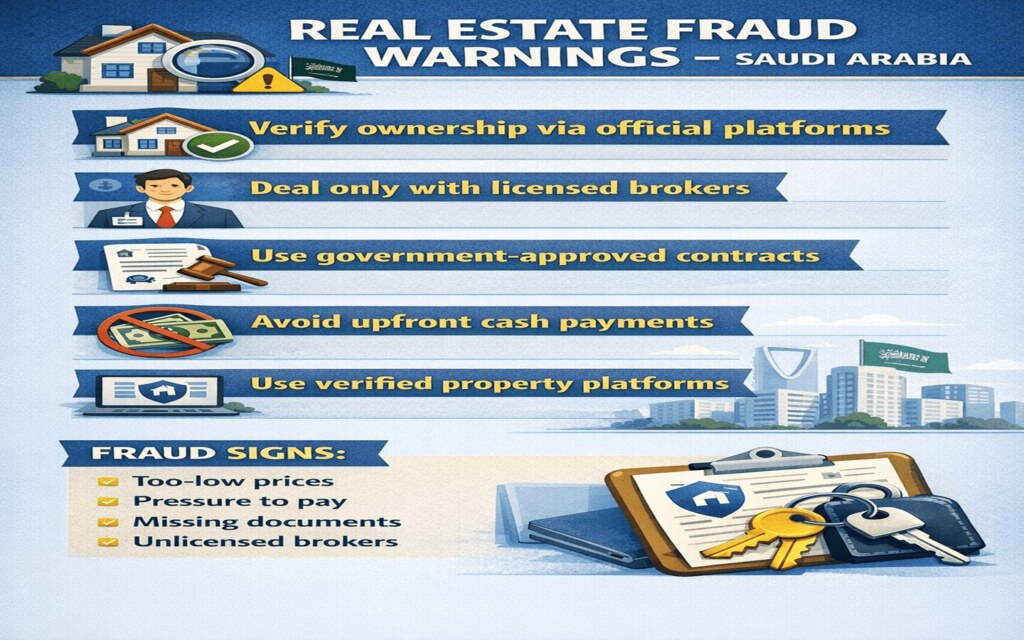
Authorities issue Real estate fraud warnings to help buyers recognize and avoid scams. These warnings focus on key areas of caution:
Verify ownership and documentation
Before buying any property, confirm the seller’s identity and legal ownership through official channels like the Ministry of Justice platform or Ihkam. Ensure the property is free from disputes, mortgages, or liens. Proper verification prevents financial loss and provides legal protection.
Use licensed brokers only
Always work with brokers who hold a valid license listed with the Real Estate Authority. Licensed brokers are regulated and accountable, whereas unlicensed agents may misrepresent deals or take client funds. To reduce the risk of fraud even further, we recommend working with trusted brokers verified on the Bayut Saudi Arabia platform. You can view and contact them here.
Rely on government-approved contracts
Use official contracts such as Tawtheeq for all transactions. These legally binding documents define ownership, payment terms, and responsibilities. Avoid hand-written or informal agreements, as they offer no legal protection.
Avoid upfront cash deals
Never transfer funds before verifying the property and all documents. Use escrow services or secure bank accounts linked to licensed agencies. This ensures your money is protected until the transaction is fully verified.

Stick to official platforms
As part of Real estate fraud warnings , buyers are advised to use government-approved platforms like Ejar, Sakani, and Real Estate Saudi for property listings and transactions. These platforms provide verified properties, legal oversight, and a secure environment, helping protect buyers from scams. Avoid relying solely on social media or unverified online advertisements, as these are common sources of fraudulent activity.
Signs of real estate fraud
Recognizing early warning signs is crucial. The most common indicators include:
- Unrealistic property prices that are far below market value
- Pressure to make quick payments
- Refusal to provide official documents or title deeds
- Unlicensed brokers or unverified agents
- Lack of approvals or permits for projects
These signs should alert buyers to investigate further before proceeding with any transaction.
Online real estate fraud in Saudi Arabia
Online platforms have increased convenience but also exposed buyers to new types of scams. Real estate fraud warnings highlight risks such as:
- Fake listings with stolen photos or misleading descriptions
- Ghost projects promoted without official permits
- Brokers or agents operating online without a valid license
- Transactions conducted solely through WhatsApp, Instagram, or informal channels
Buyers should rely only on government-backed platforms like Ejar Platform and Sakani to verify listings.
How to report real estate fraud in Saudi Arabia
Saudi Arabia provides clear legal channels for reporting real estate fraud. Steps include:
- Report to the Real Estate General Authority: Submit complaints online or at a local branch
- File a complaint with the Ministry of Housing: Use the official portal for property violations
- Escalate legal cases: In cases of forged documents or criminal deception, contact the Public Prosecution
- Civil or commercial disputes: Submit cases to the General Court or Commercial Court
- Collect evidence: Keep contracts, payment receipts, screenshots, and communication logs
How to protect yourself from real estate fraud
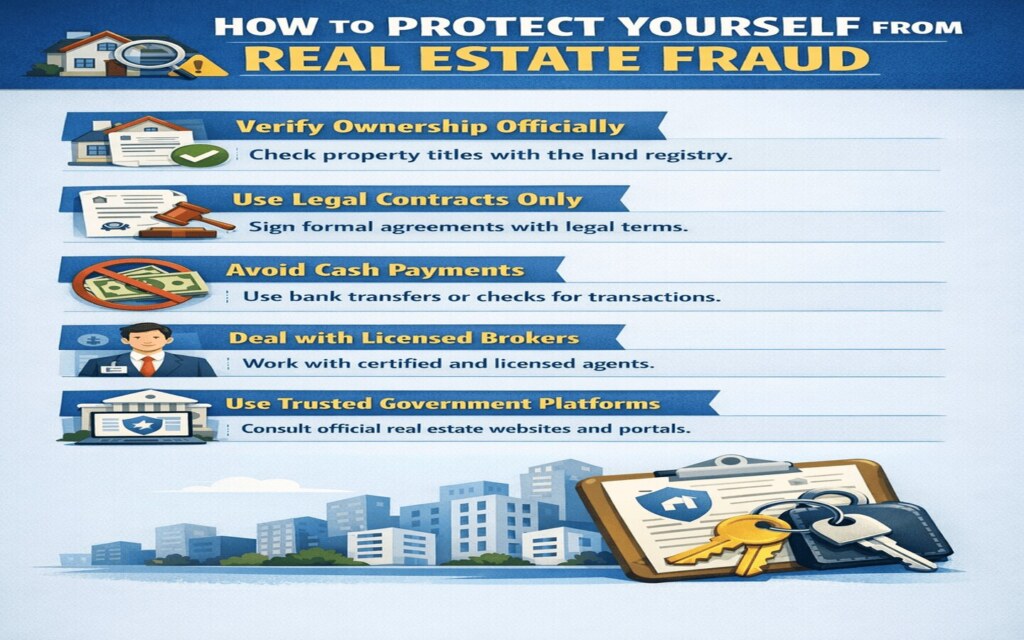
Protection requires caution, verification, and using only trusted sources. Key strategies include:
- Verify property ownership: Use the Ministry of Justice real estate platform
- Use legally binding contracts: Always use Tawtheeq contracts for any property transaction
- Avoid upfront cash payments: Use escrow services or bank accounts tied to licensed agencies
- Work with licensed brokers: Confirm their credentials through official channels
- Check property status: Ensure it is free from disputes, mortgages, or liens
- Prefer government-approved platforms: Ejar, Sakani, or verified developer partnerships offer safer options
Frequently Asked Questions
Before answering the most common questions, it is important to remember that awareness and verification are the strongest defenses against real estate fraud.
What is the most common type of real estate fraud?
The most common type is selling property without legal ownership, followed by fake online listings and unlicensed brokers.
What is the fraud law in Saudi Arabia?
Real estate fraud is prosecuted under both criminal and civil law, with penalties that may include imprisonment, financial fines, and asset recovery.
What are the warning signs of fraud?
Key warning signs include unrealistic prices, missing official documents, unlicensed brokers, and pressure to make quick payments.
What is the definition of real estate fraud?
Real estate fraud is any intentional deception related to property transactions aimed at unlawfully obtaining money or ownership rights.
To this point, we have reached the conclusion of our article in which we discussed real estate fraud warnings in Saudi Arabia, the most common signs of fraud, online risks, reporting procedures, and practical protection methods. Staying informed and relying on official platforms is essential for making safe real estate decisions.
We invite you to visit Bayut Blog to explore more reliable insights and stay updated with everything useful and new in the Saudi real estate market.