Saudi Arabia’s strategic location along the Red Sea and the Arabian Gulf makes ports in Saudi Arabia critical for commerce, trade, and economic development. From ancient trading harbors to modern deep-water facilities, the Kingdom has invested heavily in port infrastructure to support its growing economy. This article explores major sea ports, their importance, and historical context.
Major Sea Ports in Saudi Arabia
Saudi Arabia hosts several major sea ports that serve as hubs for international trade. These ports are essential for importing and exporting goods and supporting industrial growth.
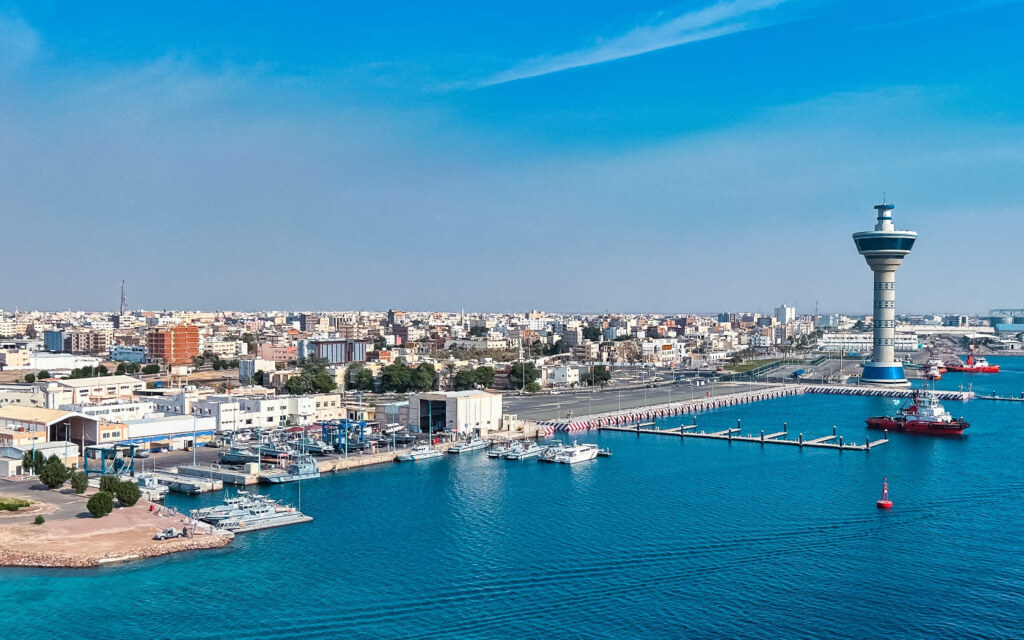
- King Abdulaziz Port (Dammam) – Located on the Arabian Gulf, this port primarily handles industrial shipments and bulk cargo.
- King Fahd Industrial Port (Jubail) – Known for its petrochemical exports, it supports one of the largest industrial cities in the Kingdom.
- Jeddah Islamic Port – Situated on the Red Sea, it is the busiest port in Saudi Arabia and serves as a gateway for Hajj pilgrims.
- King Abdullah Port – A deep-water port near Rabigh, recently modernized to handle container traffic efficiently.
- Yanbu Commercial Port – Handles industrial cargo and is closely linked to the nearby Yanbu industrial zone.
Each of these ports plays a vital role in diversifying Saudi Arabia’s trade routes and boosting economic activity. (Ministry of Transport) (Saudi Ports Authority)
Read also: What Makes Al Khafji Port an Important Gateway in Northern Saudi Arabia?
Importance of Ports in Saudi Arabia
Ports are not only about shipping goods—they are vital to the nation’s economic and strategic growth. The importance of ports in Saudi Arabia can be seen in several ways:
- Ports enable the import and export of essential goods, including food, raw materials, and consumer products
- Many ports are linked to industrial zones, supporting the energy and petrochemical sectors
- Ports generate thousands of direct and indirect jobs in logistics, transportation, and supply chain management
- Ports help Saudi Arabia reduce reliance on oil by supporting non-oil trade
- Ports along the Red Sea and Arabian Gulf ensure access to major international shipping lanes
In addition to these economic factors, Saudi ports are essential for regional integration and supporting the Kingdom’s Vision 2030 objectives, which emphasize industrial growth and global trade competitiveness.
Largest Ports in Saudi Arabia
Some ports in the Kingdom are larger in terms of capacity, cargo handling, and infrastructure. The largest ports in Saudi Arabia include:
- Jeddah Islamic Port – The largest and busiest, handling millions of containers annually.
- King Abdulaziz Port (Dammam) – Largest on the Arabian Gulf, essential for oil, petrochemical, and bulk shipments.
- King Abdullah Port – A new deep-water facility designed for mega container ships.
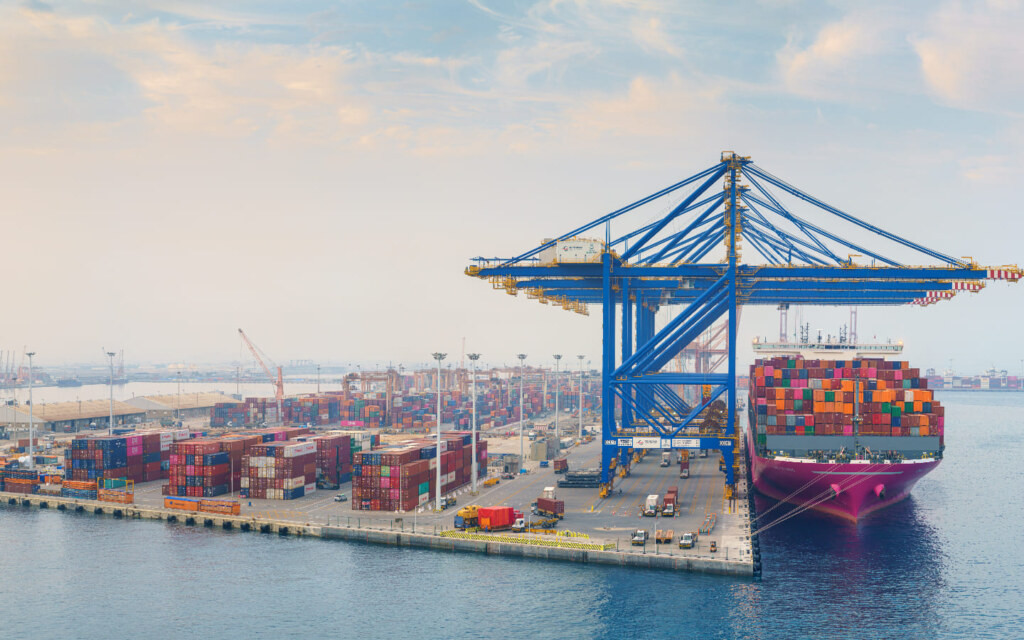
These ports have modern cranes, automated systems, and container handling equipment to manage increasing trade volumes. They are a testament to Saudi Arabia’s commitment to becoming a global logistics hub.
Port Cities in Saudi Arabia
Many cities in the Kingdom developed around port activities. Some of the most notable port cities in Saudi Arabia include:
- Jeddah – Historically a trade and pilgrimage gateway
- Dammam – Linked to King Abdulaziz Port, central to Gulf trade
- Jubail – Industrial city with a focus on petrochemicals
- Yanbu – Port city supporting industrial and chemical exports
- King Abdullah Economic City – Modern city built around King Abdullah Port
Each port city combines urban infrastructure, logistics hubs, and industrial zones. They serve as economic engines for the region while supporting international trade.
How many port cities are in Saudi Arabia?
Saudi Arabia has approximately 10 major port cities, though several smaller ports and harbors also exist along its coasts. These cities are strategically distributed along the Red Sea (west) and the Arabian Gulf (east). The exact number can vary depending on whether industrial and minor commercial ports are included. The key takeaway is that these port cities form the backbone of Saudi Arabia’s maritime trade network.

What was the first port in Saudi Arabia?
The first port in Saudi Arabia is historically considered to be Jeddah Islamic Port, established centuries ago as a trading hub and pilgrimage gateway. Jeddah became the main entry point for pilgrims traveling to Makkah, linking Saudi Arabia to Africa, Asia, and Europe.
Over time, it evolved from a simple harbor into a fully modernized port, capable of handling millions of tons of cargo annually. Its rich history underlines the Kingdom’s long-standing maritime tradition.
Ports in Saudi Arabia – Economic and Strategic Pillars
Ports in Saudi Arabia have evolved from historical trading harbors into high-tech logistics centers. They contribute significantly to national GDP, support the Kingdom’s Vision 2030, and facilitate global trade. Modern ports like King Abdullah and King Fahd Industrial Port are not just cargo facilities—they are economic zones that attract investment and support industrialization.
These ports are also strategically placed to secure shipping lanes. Red Sea ports like Jeddah provide access to Europe and Africa, while Gulf ports like Dammam link Saudi Arabia to Asia and neighboring Gulf countries.
Challenges and Future Developments
Saudi ports continue to modernize, but there are challenges:
- Increasing Trade Volumes: Growing imports and exports require continuous infrastructure upgrades
- Automation and Technology: Integrating advanced logistics technology is necessary for efficiency
- Environmental Concerns: Coastal development must balance industrial growth with ecological protection
- Regional Competition: Ports in neighboring countries compete for shipping traffic, making strategic planning essential
The government is addressing these challenges by investing in smart port technologies, expanding deep-water capacity, and developing logistics corridors that link ports to industrial and urban centers.
Read also: What are the Investment opportunities in Al Badayea ?
Ports in Saudi Arabia – Gateways to Progress
Ports in Saudi Arabia are much more than shipping points—they are critical infrastructure that drives trade, supports industries, and connects the Kingdom to the world. F
For businesses, travelers, and investors, understanding the network of ports and Ports in Saudi Arabia is key to appreciating the Kingdom’s economic and strategic vision.
For more insights on Saudi tourism, travel tips, and destination highlights, explore My Bayut Saudi Blog and follow us on social media for the latest trends.